My blog has moved!

You should be automatically redirected. If not, visit
http://burrintheburgh.com
and update your bookmarks.

Wednesday, April 25, 2007

Sermon on Acts 9:1-20

Third Week of Easter

April 25, 2007

Text: Acts 9:1-20

Before Paul was called Paul, he was known as Saul of Tarsus. Saul was a highly learned scholar, a Pharisee, an expert in the Law. He was also one of the earliest and more feverish opponents of Christianity. We know from the book of Acts and from Paul’s own writings that he had once been a persecutor of the church. He was personally responsible for arresting, harassing, and even murdering those who believed and followed Jesus Christ. It is Paul who writes about himself in one of his letters calling himself “the Chief of Sinners.”

I think it’s safe to say that Paul, while he was still known as Saul, was not a righteous man. He had a form of righteousness, to be sure. He was an avid follower of the Law of Moses. He knew which foods were kosher, which holy days to observe. He was strictly devoted to the outward forms of his religion while failing to comprehend the meaning behind it all.

But the type of righteousness I’m talking about here is not the type of righteousness which places us in good standing with God. A man could follow all the ceremonial niceties perfectly but still be as lost as a tax collector if he did not have faith in God’s Messiah.

Saul had an outward righteousness, a civic righteousness, you might even say a ceremonial righteousness. And none of that is bad. It’s just not sufficient. It’s only bad if you trust in it for salvation.

It’s the same way with us today. While none of us is probably all that worked up over things like circumcision, kosher diet, and animal sacrifices. We do get excited about outward righteousness in other ways. We care if a person is a good, decent person, a law abiding neighbor, a considerate person. For instance, a husband who is faithful to his wife, who is a spiritual leader in the household and provides for his family is what we would probably call a good man.

We’ve all gone to funerals where we hear people say things like “john was such a good person.” That always makes me cringe a little because Jesus said there is no one good except one person and that is God himself. And St. Paul wrote in Romans chapter 3: There is no one righteous, not even one; there is no one who understands, no one who seeks God. All have turned away, they have together become worthless; there is no one who does good, not even one.”

So on the one hand, no human being, other that Jesus Christ who is God-in-the-flesh, can truly be called good. But even having said all that, we do sometimes use the word simply to refer to the outward behavior of a person. Who would you rather have as a next door neighbor, a peaceful, law-abiding family man who is kind and considerate of other people’s feelings? Or would you rather have an obnoxious, selfish neighbor who couldn’t care less about you or anyone else? You’d rather have the first guy because he’s a good person and the second guy is not.

So Saul of Tarsus, later to be renamed Paul, was one of the good guys. At least on the surface of it. He obeyed the law. He kept the commandments as best he could. So there is a sort of outward righteousness, an outer goodness to him.

But on the inside, not so much. Do you remember what Jesus called the Pharisees? He called them whitewashed sepulchers. A sepulcher, of course, is a tomb. And a whitewashed sepulcher is just a thing filled with dead rotting stinking filth that happens to be nice and shiny and white on the outside.

Are you a whitewashed sepulcher? In the end, it doesn’t matter what people see when they look at you. They may all say at your funeral, “Oh, what a good person she was.” But God alone sees the inside. He knows what lies on the heart. He is not tricked by our brightly polished outward appearance of goodness. He sees the selfishness, lust, greed, and pride. The outer righteousness I’ve been talking about is good for this life, for this world. It makes for good neighbors. But it is totally worthless when it comes to salvation.

The only righteousness which counts before the judgment seat of God is the righteousness of Jesus Christ Himself. Jesus said that unless your righteousness exceeds that of the scribes and Pharisees you will never enter the kingdom of heaven (Matthew 5:20). Jesus is the only truly righteous man who has ever lived.

How then can any of us ever be saved? If being a good decent person is not good enough, and if you have to have perfect righteousness and if Jesus is the only man who was ever perfectly righteous, what will happen to us? It’s a fair question. Here is the answer. You will be saved because God credits the very righteousness of Jesus Christ to you. Jesus is righteous but you get the credit. And that’s because it went the other first on the cross: you are the sinner, but Jesus took the blame. It’s what might be called an alien righteousness because it comes from outside of you. To all who trust in Him, to all who have faith, God credits the righteousness of Jesus Christ. That’s what we mean when we emphasize that salvation is a gift from God. There is nothing you can ever do to earn His merit or favor. But you don’t have to. Christ has merited it for you.

On his road to Damascus, on the way to go capture and persecute more believers, the post-resurrection Lord appeared to him. This was shortly after Easter and after the Ascension. So the Jesus whom Saul encounters is the exalted Lord in all of his radiance and light. And you’ll notice that Saul is struck blind from the experience. Or was he?

Before he encountered Jesus, he could see, yet he was spiritually blind. He didn’t need anyone to help him walk around, but he was in the dark when it comes to the things of God. He was devoted to keeping the law and placed his faith in the power of the law to save him. But while the Law of God is powerful to do a lot of things, the one thing it cannot do is save a sinful man. The Law may help us achieve a certain sort of outward righteousness like I’ve noted, but this is simply not good enough. For God does not look only at the outside of a man, but at his inside, the most intimate thoughts and desires of his mind and heart. And on this basis, at the very least, we are all condemned and lost.

A fellow pastor likes to use this illustration. Think about what a very terrible thing it would be if they ever invent a mind-reading machine. What would it be like if scientists were to actually create a device that would enable other people to see and read your thoughts? I think masses of people would be jumping off of cliffs if that were to happen. Do you really want your spouse, your children, your parents, your boss, your pastor, your neighbor to know everything that goes on inside your head? Wouldn’t you be ashamed? I confess that I would be.

And yet, we know that God knows our every thought and it hardly concerns us in the least. We act as if we are more afraid of what other people will think of us than with what God will think of us.

Saul could see and yet he was blind to the most important realities of life. And get this; it wasn’t until God made him blind that he could really see things as they truly are. Only after Saul was struck blind by Jesus on the Damascus road did he come to understand that Jesus Christ is Lord. Only after Saul was struck blind did he begin to see that the Messiah had to die in order to pay for the sins of the world, like a sacrificial lamb. Only after Saul was struck blind did he understand that people are not reckoned just in God’s sight on account of their obedience to the law but on account of the obedience of Jesus Christ.

This is how it is with God. You have to go blind before you learn to truly see. But more than that, you have to die before you can truly live. And you die to sin daily through repentance, through humbling yourself and confessing your faults, through admitting your shortcomings, through acknowledging your failure to obey God’s commandments in thought, word and deed. And it is on the other side of this daily dying to sin through humble repentance that God will raise you up from the dead. He will resurrect you, not just spiritually but also in your body on the last day, just as He raised Jesus bodily on the first Easter.

You could say that Saul was struck blind by Jesus. Or you could say that he was given sight for the very first time.

Amazing Grace, How sweet the sound

That saved a wretch like me.

I once was lost, but now am found.

Was blind, but now I see.

In Jesus’ name. Amen.

Sphere: Related Content

Call Night

One of the most delightful customs in our beloved Lutheran church body is what takes place at the seminaries each spring. In April, our students receive their vicarage (internship) assignments and the graduates receive their call placements.

How wonderful it was to watch these highly dedicated men being sent to serve God's people in places such as Capistrano Beach, CA; Boulder, CO; Snohomish, WA; Wheaton, IL; Greensboro, NC; Midland, MI; Yuma, AZ; Kibera, Kenya; Plano, TX; Topeka, KS and many others.

If you're interested, you can see the list of names and places for our vicars, our deaconess interns, and our candidates.

Sphere: Related Content

Monday, April 23, 2007

Face Transformer

Ever wonder what you'll look like in old age? Or what if you were a different race, or sex? Ever wonder what you'd look like in a painting by El Greco or Botticelli? Well, wonder no more. Go and enjoy the Face Transformer website.

HT: SouthCon

Sphere: Related Content

Friday, April 20, 2007

Cat Sign


Sign seen in a church in California. What?! Why don't we want the cats to get in? I want the cats to come in.

Sphere: Related Content

Thursday, April 19, 2007

Funny Conan TV Man

So in tonight's Conan O'Brian, his monologue had these two funny jokes:

A clothing designer has announced the development of a new swimsuit for Muslim women. They're calling it the burkini. It's a burkha made into waterproof clothing. The announcement stated that it's perfect for the Muslim women who love to swim but hate getting stoned to death.

And, this from the Pittsburgh zoo. A polar bear had an infected tooth so the zookeepers gave it a root canal. Zoo officials are describing the bear as stable and they're describing the dentist as handless.

Sphere: Related Content

Wednesday, April 18, 2007

Would You Do It All Over Again?

When I have to fly, I like to have a fun novel to occupy my mind. Boy, did I win the lottery with my latest. It's called Replay and it's by Ken Grimwood. What a fascinating book. The premise is that a man dies in 1988 and instantly re-awakens as himself back in 1963 while he's a freshman in college. The whole world is still his oyster and his life still lies before him. He has the opportunity, essentially, to re-live every major aspect of his adult life and can choose to do things differently. What would you do?

But then when 1988 hits again, he dies like before and returns once more. What lessons did he learn from his last attempt? This time around, he makes completely different choices, always in the chase for that elusive prize: Happiness.

Like most consumers of pop culture, I've read numerous books and seen films about time travel or other fantasies about alternate lives (Sliding Doors, Run Lola Run, Groundhog Day etc.). But this one is certainly one of the most entertaining, substantive and thought provoking. I'm about 75 pages from the end and I'm dying to see how it concludes. If Grimwood spins as satisfying a conclusion as he has a body of the story, this will make my list for favorite books read this year.

Sphere: Related Content

Monday, April 16, 2007

Sights of Pittsburgh

Even though The Burr no longer resides in the burgh, part of his heart remains in good 0l' southwest Pennsylvania. Here are some terrific photos of our former home town.

Sphere: Related Content

Friday, April 13, 2007

Jesus' Tomb People Backtrack

I am continually dumbfounded by how gullible people are when it comes to anti-Christian hype. Anyone who bothered to do five minutes of research could have debunked that ridiculous "Jesus' Tomb" business from James Cameron recently. But we don't want the facts to interfere with our Christian-bashing.

Not surprisingly, now many of the experts cited in Cameron's silly film are saying they were misconstrued, misquoted, etc. See here.

Certainly, the big media will saturate the airwaves with these corrections just as they did with the original sensational and preposterous claims . . . NOT!

Sphere: Related Content

Monday, April 09, 2007

Favorite Dystopia

I'm curious. What is your favorite dystopic vision of the future in books, television or film? Why? Here are some that come to mind.

Brave New World
Escape from New York
Buck Rogers
Terminator
1984
Children of Men
Minority Report
Soylent Green

Sphere: Related Content

Sunday, April 08, 2007

"For the Joy Set Before Him..."

We never stop looking at the cross, but sometime you have to look beyond the cross to see the empty tomb. A couple of years ago, I took a little survey after church one Sunday asking my congregation's opinions about the movie about the Passion of the Christ. And one person wrote this comment: “I was worried about the gore ahead of time, but knowing about the resurrection got me through it.” You know, somehow I think that is what Jesus Himself was probably thinking at the time. I was worried about the gore ahead of time, but knowing about the resurrection got me through it. "Let us fix our eyes on Jesus, the author and perfecter of our faith, who for the joy set before him endured the cross, scorning its shame, and sat down at the right hand of the throne of God (Hebrews 12:2)." The message of the cross would be unbearable if we didn’t know about the resurrection.

Sphere: Related Content

Saturday, April 07, 2007

Holy Saturday

Perhaps my favorite service of the liturgical year is the Easter Vigil on Holy Saturday. It is a powerful bridge from the grief of Good Friday to the joy of Easter. The service begins in darkness and gradually transforms into the brilliant light of the resurrection. There are so many things going on in the service that it's not possible for me to do it justice in a blog: the service of light, the readings, the baptisms, the Eucharist. It's all there.

And I must add that our pastor did an especially knock-out job with his sermon. I'm hoping he puts it up soon to our church website.

Sphere: Related Content

Friday, April 06, 2007

Tre Ore

Our church, together with a couple of neighboring Lutheran congregations, held a Tre Ore ("three hour") service today.

Why a church service three hours long? It is a custom to wait with Jesus from noon til three on Good Friday because it was during those hours that darkness covered the earth while Jesus hung dying.

He was actually on the cross for six hours, beginning at about 9 a.m. His "trial," you see, had taken place over night and in the wee hours of the morning.

But at noon, the sun hid it's face until our Lord expired at about 3 p.m. Even the earth and stars could not bear the horror of Christ's death.

The service at Redeemer was exhausting, to be sure, but quite wonderful. The music, the liturgy, the ceremonies, the texts, everything was amazingly powerful.

Sphere: Related Content

Why Did Jesus Die on the Cross?

If you went outside and conducted a poll asking the man on the street this question: “Why did Jesus die on the cross,” what kinds of responses do you think you’d receive?

I think some people would say He died on the cross because one of His followers betrayed Him and the Jews and Romans conspired together to have Him killed. And that would be true. That is what happened, but why did it happen? Why did He have to die on the cross? It’s not good enough to just say that some people didn’t like Him and they rejected Him and had Him murdered. That is only part of the answer.

I think some other people would say that Jesus died on the cross to show us how much He loves us. And that’s kind of true too. Jesus Himself said, “Greater love hath no man than this, that He lay down His life for His friends.” But again why did He have to die on the cross to show us His love? Couldn’t He have found a more pleasant way to do it? I love my wife and family and I would be willing to die for them, but I wouldn’t do it if I didn’t have to. If all Jesus was trying to do was give them a sentimental expression of His affection, then I think He could have just washed His disciple’s feet and left it at that.

And I am sure that some of the more perceptive respondents would say something like, “Jesus had to die… in order to save us.” And you’d say, “Bingo. Right on the nose.” But then follow up on that and ask, “How does the death of Jesus do that?” and you might get a blank stare.

A related question to the first one (Why did Jesus die on the cross?) would be this question (Who was responsible for the death of Jesus?) And maybe by answering the second question first, we will be answering the first question as well. Who is responsible for the death of Jesus? And why did Jesus die?

Throughout history there have been those who have thought about the Passion of Jesus and become angry at the Jews and blamed the Jews for the death of Jesus. It is a fact that sometimes Christians would chase the Jews out of their villages and burn down their synagogues for being Christ-killers. And since today everyone is so oversensitive about these things, there is now a movement to remove any references to the Jews’ involvement with the death of Jesus for fear of causing another anti-Semitic groundswell. Passion plays that have been performed in Europe and North America for a hundred years are now being revised for the first time to remove any derogatory mention of the Jewish leaders. And when you respond to the cultured despisers that you are just following the text of the Gospels, they tell you that the Gospels themselves are anti-Semitic documents and should be classified as hate speech.

Jesus doesn’t need us to defend Him. He didn’t need His disciples to draw their swords against the temple guards or the Roman soldiers. He could have summoned armies of angels to come to His aid, but He didn’t. And far from asking His followers today to avenge His death by burning synagogues, Jesus prayed for His persecutors saying, “Father forgive them. They know not what they do.” It was Jesus who taught us that we should love our enemies and to pray for our persecutors.

But then there are the people who like to sympathize emotionally with Christ. They weep and wail over Him because He was so innocent. They think “look at poor Jesus,” and “don’t we feel so sorry for Jesus.” They are like the women who followed Christ from Jerusalem crying loudly as He carried His cross. Jesus rebuked them. He told them that they should not weep for Him. They should weep for themselves and their children (Luke 23:28). What did He mean by that? Why should we weep for ourselves and our children when we think about the death of Jesus Christ?

Because God does not want your pity. The better response, I think, is to say, “Look what my selfishness has caused to happen. My impatience, my stinginess, my lust, my greed, my folly.”

So Martin Luther wrote, “You should deeply believe, and never doubt, that in fact you are the one who killed Christ. Your sins did this to Him. Therefore, when you look at the nails being driven through His hands, firmly believe that it is your work. Do you see His crown of thorns? Those thorns are your wicked thoughts.”

To illustrate, let’s say that you are going about your daily business when an evil person comes along and kills an innocent child in front of you. You would feel angry at the murderer and sorrow for the child. But then what if you found out later that it was actually something you did or said that was responsible for the death of that child. How would you feel about that? Now you’re not just sympathetic. Now you feel responsibility. Now you feel remorse. Now it’s personal.

Someone once said that the Good Friday liturgy is like a funeral for Jesus. Perhaps that is true, but like a Christian burial, we do not mourn for the one who is deceased. We don’t mourn for Jesus this day. If we mourn today, we mourn for our sins.

When you consider the wounds and scars of the Savior, you will hopefully mourn for your sins, but then dry your tears and be glad because the wounds and scars of Jesus are proof that your sins have been fully paid for. Pardon is yours. Jesus paid the price. And His scars are the receipt, the proof of payment. Jesus paid a debt He didn’t owe, because we owed a debt we couldn’t pay.


Sphere: Related Content

Monday, April 02, 2007

Well Calibrated Ignorance in UK School

This is almost so outrageous, I'm tempted to think it's a jest. It seems that some British schools are starting to drop certain topics from their history curriculum for fear of offending the Muslim children. Which topics, you ask? Namely the Holocaust and the Crusades.

The reason, according to the Daily Mail, is because some of the things taught in the normal state curriculum contradicts what is taught in the local mosques. Things specifically pertaining to the Holocaust and the Crusades.

Gee, I wonder if the same schools are teaching things that might contradict what is taught in certain local Christian churches. Why would the opinions of Muslims receive such special respect?

After the Holocaust, the world said, "Never Again." Yeah. Right.

Sphere: Related Content

Friday, March 30, 2007

Babel

This film reminded me of Crash (the one with Matt Dillon) the same sort of journalistic - almost voyeuristic - realism. See also 21 Grams. The same overall theme too: People basically misunderstand each other. It's a good theme.

Films like this sometimes remind me of a Dicken's novel or a Shakespeare play. Mistaken identities. Interconnected stories. Tragic lives resounding from false assumptions, prejudices, and ignorance.

It's a sad movie. Sad in the sense that Macbeth is sad or Hamlet or Othello. So much needless human suffering. What is the source of our pain? Some of it is the result of the malicious intent of a few. Some of it comes from stupidity. And then the foolish things we do to cover our stupidity. A lot of it just results from the broken jumbled mess of life.

Of course, Babel takes a little jab at the U.S. government, making it so quick to see terrorism behind every bush. But other than that, I found the film a moving expression of corrupted humanity.

Sphere: Related Content

Thursday, March 29, 2007

Fire. And Now Ice.

Behold what I beheld outside my hotel window this morning in Boulder, CO. Not a sign off snow yesterday. I was going around w/o a jacket.

Sphere: Related Content

Wednesday, March 28, 2007

Hell is Real

Hell and damnation are real, says Pope Benedict XVI.

It's not easy in this day and age to speak about these subjects. Few take the words of Jesus seriously. He tells us more about hell and damnation that any other figure in the Old or New Testaments.

I've met Christians who may agree that hell exists, just don't think anyone really goes there. No one except baby rapists, in any case. Jesus teaches differently.

A pastor must learn to know his sheep so that he can apply the whole counsel of God appropriately. While the message of atonement through the blood of Jesus is central to all we proclaim, the gospel has no context if we don't announce the threat of hell. If there is no such thing as eternal damnation, then what, precisely, did Jesus save us from? Some people are afraid to die, they fear the judgment. And rightly so. We must ease their fears with the promise of grace. But many others are not afraid of God at all. To them, the cross is just a weird thing pastors talk about.

Sphere: Related Content

Thursday, March 22, 2007

I'm Back!

I get so irritated with myself when I let so many days pass between blog posts. I strongly desire to post every day. But some weeks I just don't have it in me.

Tonight, I don't want to talk about me however. I want to talk about our staff in the Admission Department of Concordia Theological Seminary, Fort Wayne, IN.

This weekend, we have a bunch of guests for one of our two annual visitation weekends. It is exciting to have so many excellent prospective students and their families with us.

I must say that I was particularly impressed with my recruitment staff today and this evening. This is an outstanding group of hardworking and dedicated individuals. They really do go above and beyond the call of duty. I am thankful and the seminary is blessed to have them.

Sphere: Related Content

Wednesday, March 14, 2007

Devil in the Details

A friend and I went to see 300 this evening at the local theater. What a spectacle! One thing I thought very interesting was how Satanic Xerxes was in the movie.

Certainly, it was not uncommon for ancient near eastern monarchs to attribute divine status to themselves - an act which is inherently Satanic. But I could not help noticing how similar his speeches were to the enticements of Old Nick himself.

"Hey, I don't ask for much. You can keep your lands. You will receive wealth beyond your wildest imaginings. You're a victor. You can be the warlord of all Greece. Only bow to me and all this can be yours."

Not so different from the Tempter's attempted seduction of Jesus, eh? This is the Enemy's tactic. He presents himself as your greatest ally. He's really on your side after all. He only wants what is best for you. "Jesus, you're hungry. Make yourself a sandwich."

For a nice write up on the film 300, see Pr. Petersen's blog here.

Sphere: Related Content

Tuesday, March 13, 2007

300

So who has seen 300? What are your thoughts? I haven't seen it yet, but am thinking tomorrow night sounds good.

Not surprisingly, the Iranian government doesn't like it. See here. It's astonishing how the official quoted actually thinks Hollyweird bows to the political wishes of our president.

Sphere: Related Content

Saturday, March 10, 2007

Hannibal NOT Rising

So this morning, I just finished reading Hannibal Rising by Thomas Harris. It was a disappointment, I must say. It is definitely the weakest of the books in the Hannibal Lecter series. It seems that Harris was writing on auto-pilot, probably just fulfilling the request of some movie producer. It's formulaic and predictable, not scary in the least. Serious fans of the franchise will want to read it, if only to fill in the blanks, but it is not a must-read for anyone else.

I guess my most serious criticism is that Harris succumbs to the post-modern trend of making the bad guys the real good guys. How can anyone really fault Hannibal for his atrocious deeds when you consider the circumstances? The reader roots for the villain, who is quite understandable after all. This is a far cry from the complicated yet undeniably evil Dr. Lecter of the previous stories.

Are real serial killers made or born? The evidence says both. I regret that Harris's latest installment makes Lecter purely a product of his experiences. He is not just a sociopath. He's a victim.

Sphere: Related Content

LCMS Pastors 2 Be

If you or someone you know is planning to prepare to become a Lutheran pastor, go to my facebook page and request to join my group called, "LCMS Pastors 2 Be." We are currently discussing "contemporary worship" and "contemporary Christian music."

Sphere: Related Content

Friday, March 09, 2007

Death by Meeting

Everyone who runs meetings should look at this book by Patrick Lencioni, Death by Meeting. We all hate meetings. Me too. But the problem is not usually that we have too many meetings, but that our meetings are too disorganized. Hence they last too long and get very little done.

Lencioni recommends have more meetings, not less, but doing them smarter. He suggests four types of meetings. These are my take on what he writes:

  • The Daily Check-IN - No more than 5 minutes every morning. No one sits down. Everyone has 60 seconds or less to tell the others what they're doing that day. This is nota time to problem solve. You can ask clarifying questions but no debate.

  • The Weekly Tactical - This should be an hour or two. This is the meeting where you plan how to get things done. You solve nuts-and-bolts problems.

  • The Monthly Strategic - 2 to 3 hours. Let people think big and talk big. Discuss strategy, vision, goals and long-range plans.

  • Quarterly Brainstorm - A offsite retreat. Lencioni suggests 2-3 days long. Gives everyone a chance to talk.
Obviously, ever organization has its own culture. Some of this is not practical for us. We won't do things exactly like he suggests. But it is interesting.

As it is, I think many organizations try to do their informative, tactical, strategic, and brainstorming all in one meeting. And that's too confusing.

Sphere: Related Content

Wednesday, March 07, 2007

Reading List

I am usually reading at least three books at any given time. I like to have one fiction, one general non-fiction, and one on religion or theology. You can determine which is from which category.

Here's what I'm reading these days:

  • What Dreams May Come- So far, I've enjoyed everything I've read by Richard Matheson. Besides this one, I've read I Am Legend and The Beardless Warriors: A Novel of World War II. Dreams is a fanciful story of a man who dies, goes to "heaven" but misses his wife so much that he is willing to endure the torments of hell to be with her. This book does not convey a Christian understanding of life, death and the afterlife. But he has researched very thoroughly the views of other world religions which inform many of the trendy armchair philosophers of our time. Very romantic. Very interesting. Very full of rubbish.

Sphere: Related Content

Tuesday, March 06, 2007

Faith or Wishful Thinking

What is the difference between faith and wishful thinking? Someone said to me regarding a specific desired outcome to a problem, "let's trust God that this will happen."

Now that would have been good and pious if he'd meant, "I don't know what will happen, but I believe that God is good and He will work it all out for the best." But that is not what this person meant. The rest of his conversation made it clear that he was saying, "I want this to be resolved in this particular way. I will put my faith in God that he will resolve it in this very manner."

It's like someone saying, I have cancer and I am going to trust God to heal me. Or I want this thing so I'm going to pay for it, even though I can't afford it. I will trust God to make my ends meet for me.

Faith can only exist where there has first been a specific promise. If you can show me that God has promised unequivocally to heal you of your malady in this lifetime, then you can trust him for that. Otherwise, it is wishful thinking.

We can't use faith to excuse us from being responsible beings. God does not promise to pay your credit card bills or remove every disease in this lifetime. So many times people simply project their wants and desire on God and make him responsible for them. And then when things don't happen as hoped, they get hurt and upset with God.

Remember this: Faith requires a promise. You cannot get mad at God for not doing things which He has never promised to do.


Sphere: Related Content

Coffee and Computers


I've learned that computers do not like to drink coffee. I discovered this interesting fact after spilling coffee all over my laptop yesterday morning. It is now ... how do you say... on the fritz.

Sphere: Related Content

Monday, March 05, 2007

I Ate a Rattlesnake

After a busy morning filling in for our pastor, I flew out west for a week-long recruitment trip. Arrived in Phoenix Sunday evening. Went to the restaurant attached to the hotel and lo and behold, what did I see? They have rattlesnake on the menu. And let me tell you that rattlesnake does not taste like chicken. That is, unless you think chicken tastes slightly sweet, is slimy and chewy.

Sphere: Related Content

Sunday, March 04, 2007

Wrestling w/God

I am always intrigued by the story from Genesis 32 of Jacob wrestling with the angel. Of course, this passage and Hosea 12 identify the mysterious stranger as the Lord God himself.

What does it mean to wrestle with God? Jacob was always wrestling with someone. Even in his mother's womb, he wrestled with his twin brother Esau.

What is remarkable is that Jacob refuses to release the angel until he grants him a blessing. What is it with Jacob and his obsession over getting blessed? Remember his crafty deception of his father, Isaac, to steal the blessing intended for Esau?

Jacob wrestled with God and lived to tell about it. Notice he didn't walk away without injury, however. Being in the intimate presence of the holy one has a crippling effect upon us. But in our hobbling, we become recipients of divine favor.

Interestingly, the lectionary our congregation uses aligns this Old Testament text with the healing of the Canaanite woman's daughter in Matthew 15. There was another example of someone grasping desperately for God, refusing to be discouraged, insisting humbly on being helped. Martin Luther said we should boldly expect God to honor his promises. And what precisely does God promise the sinner? Forgiveness. God gives the sinner the right to demand that God fulfill His own Word. That's the kind of firm confidence demonstrated by the woman who persisted in prayer despite Jesus' initial unfriendliness and Jacob putting God into a headlock.

Sphere: Related Content

Saturday, March 03, 2007

School House Rock and Worldview

We went last night to our 11-year-old son's school musical. It was based on all those awesome Schoolhouse Rock ditties from the 70s. I used to enjoy those on Saturday mornings. Still remember so many of the lyrics from Conjunction Junction, I'm Only a Bill, Interplanet Janet, etc. It was great fun and the kids were beyond cute.

One thing struck me, however, when they sang the one on America being the great melting pot. I was reflecting on how politically incorrect that is today. You can tell that was written at least 30 years ago.

The favored notion today is multi-culturalism and NOT that we're a melting pot. The melting pot image says that people come here from all different backgrounds and blend together to make something new and wonderful. That's a cool image for America. But the politically correct view is not that our former cultural distinctives should be blurred to create a new and truly American culture. The newer view is that I am identified first by my native tribe and only secondly by being an American citizen.

Sphere: Related Content

Jim Carrey on Religion

Actor and comedian Jim Carrey riffs on religion etc. here.

Notice the dry, withered, old canard, "I'm not religious, but spiritual."

Sphere: Related Content

Saturday, February 24, 2007

Strange Cult in Florida

This is the first time I've heard of this particular group, a cult calling themselves Growing in Grace. The leader has called himself everything from the reincarnation of St. Paul, to the antichrist to Jesus Himself. Many of his church members are so dedicated that give up to 40-50% of their incomes to him. And now, as the latest trend and to show their devotion to their leader, many members are getting the numbers 666 tattooed on their arms, legs or necks. Go here.

Sphere: Related Content

Sunday, February 18, 2007

The Value of Girls, etc.

Here is a story about abortion and infanticide in India. Many poor traditional Indians view sons as future bread-winners and girls as financial burdens. So now there is a government action to save the lives of unwanted girl babies. Recently a dump with hundreds of fetal and infant children body parts was discovered in a hospital lot.

It raises the question of the value of human life. Are some lives more valuable than others. If you do a cost analysis, do some human beings cost more than they are worth? Of course, this is a barbaric line of thought, but it is how many do think - not just in pagan India.

Parents do tests to see if their pre-born baby will have any defects such as Down's Syndrome. They may decide to have an abortion because they determine that such a life is not worth living or will be too costly emotionally and financially. The elderly or the terminally ill may feel pressured to allow themselves to be euthanized because they feel as if they no longer contribute to society.

In India, human life is cheapened by the prevailing Hinduism which teaches reincarnation. Killing your children will not be seen as evil because the soul of that being will merely go to inhabit a new body.

In the West, human life is cheapened by Darwinist materialism, the view that we are merely what we eat. This notion is that human life is nothing more than the result of random molecules stumbling into chance chemical reactions. There is no intrinsic value to anything. A life only has the value that you assign to it.

Christians see things differently. All human beings are precious to God, the Creator. He loves human beings such that He offered His Son's life for the redemption of our lives.

Sphere: Related Content

Thursday, February 15, 2007

Audio Lent Devotions

Enrich your Lenten Season by listening to the Seminary Audio Devotions, hosted by the Admission Department and featuring meditations from students, faculty, and staff of the Seminary. February 21st – April 8th (including Easter Sunday) Click here.

Sphere: Related Content

Ah, the Ecumenical Spirit

A mama Rottweiler rejected her puppy and this mama cat willingly obliges and lets him in to nurse.

Sphere: Related Content

Wednesday, February 14, 2007

Pope on Natural Law

I heartily commend the Bishop of Rome for this helpful statement.


Pope Benedict XVI reportedly lashed out against laws that he said threaten the family and social order, saying none "can overturn that of the Creator."

"No law made by man can overturn that of the Creator without dramatically affecting society in its very foundation," said the pope, according to the I-Media news agency, which reports on Vatican affairs in French.

The pope's remarks to a delegation attending a conference on "natural law" at the Pontifical Lateran University came as Portugal moves to liberalise abortion and Italy plans to grant legal status to unwed couples.

"Weakening the family is punishing society," he told the delegation. Natural law "has rules that supersede all human laws (and) does not allow for derogations by anyone."

Natural law has "concrete applications" such as protecting human life from conception to its natural end, and the institution of marriage between a man and a woman, Benedict said.

"Awareness of natural law is inscribed in our very being," he said. "The law inscribed in our nature is the true guarantee offered to everyone to be able to live freely and in dignity."

The Vatican II Council of the 1960s "reaffirmed that the institution of marriage is established by divine order, and therefore this sacred bond for the well-being of spouses, children and society" cannot be severed, he said.

Sphere: Related Content

Monday, February 12, 2007

Support Seminarians in Haiti

Those who knew Prof. Kurt Marquart know that in addition to being a brilliant scholar and teacher, he also had a burning zeal for mission work. Of particular interest to him was Haiti, the poorest nation in the Western hemisphere.

In his honor, the graduating CTS class of 07 have established a fund for pastoral education in the Lutheran church of Haiti. Go here to help.

Sphere: Related Content

Tuesday, February 06, 2007

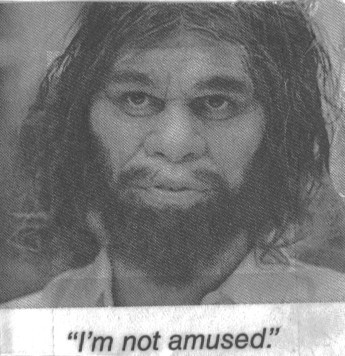
Darwinism Debunked


Aha! The best evidence that Darwinism is a farce is the skull of Charles Darwin himself. Look at these two photos. I see very little advancement btwn the caveman and the 19th century British naturalist. It just proves that Neanderthals never became extinct. One of them just wrote that they did.

Sphere: Related Content

Monday, February 05, 2007

Caveman's Crib


Funny.

Sphere: Related Content

Friday, February 02, 2007

Proverbs of John Lennon

I just visited the wonderful new public library in downtown Fort Wayne, IN. And, as expected, came home with a bag of books. I've been wanting to read a biography of John Lennon for some time and in searching for one, I came across a collection of his sayings. Here is one that immediately struck home for me:

Part of me suspects that I'm a loser, and the other part of me thinks I'm God Almighty.

At their best, artists assist humanity in understanding reality. Here John gives us all a helping hand. I think many many (if not all) people have this same dual consciousness, the feeling that one is worthless AND the feeling that one is the center of the universe. When you understand that this is the basic modus operandi of most people, it really helps you know how to apply God's Word to their lives.

Part of you needs to be comforted and assured of God's love and His kindness toward sinners. But the other part of you needs a swift kick in the britches.

Sphere: Related Content

Wednesday, January 31, 2007

From Vampires to Jesus


As you may recall, I am a fan of Anne Rice's novel about the childhood of Jesus. Here is a terrific review on the book by Dr. Gene Veith.

Sphere: Related Content

Monday, January 29, 2007

What is Next?

I just finished reading the latest Michael Crichton novel. It's called Next. I am a pretty big fan of Crichton's books but this one was disappointing. It deals with the dangers of genetic engineering and gene therapies of the possible future.

His other recent cautionary tale, Prey, about nano-technology, was quite a thrill ride. And his politically incorrect, State of Fear, about global warming deserved every bit of controversy it generated, to my delight.

To its credit, Next does bring attention to many of the troubling ethical and dangerous scientific implications of advancing genetic technologies. Crichton does not represent the religious concerns that many share, but he does highlight devastating potential abuses.

These issues sharpen even further when you understand human life to comprise more than just a random jumble of minerals and chemical reactions. A Christian author would see a much more three-dimensional problem with the current research trajectories. Nonetheless, it is useful for a secularist to observe many of the same problems and come to similar conclusions.

My problem with Crichton's latest book is not philosophical or theological. It's just not that great of a story, esp when compared to his other works. The characters are under-developed. The plot is uncertain and confused.

For a thoroughly Christian work of fiction asking very similar questions about science and human life, see instead P.D. James'The Children of Men (The book, of course. Not the film.).


Sphere: Related Content

Saturday, January 27, 2007

Faith and Good Works

Martin Luther once famously wrote that you can no more separate good works from faith in the Christian than you can separate heat from light in fire. This pertains to classic Reformation teaching next to traditional Roman Catholicism (and ironically much of "evangelical" protestantism).

I think a Roman Catholic would want to stress that we cannot separate true living faith in Christ from a transformed life of holiness. We agree that these must not and cannot be separated.

However, even though faith and works cannot be sliced apart, they should be distinguished. Take the fire example once again. I cannot separate the heat from the light but I understand the distinction. Heat and light may be inseparable in fire but they are different and have different functions.

So when I want my plant to grow, I don't subject it to more heat, but place it in better light. And when I want my leftover pizza to taste better, I don't set it in the light, but apply some heat.

So even if faith and works cannot be separated in the life of the Christian, I understand them to serve different functions. Faith is the instrument by which I apprehend the benefits of Christ's life and sacrifice, namely forgiveness and salvation. Works are the natural outflow of living faith.

Sphere: Related Content

Tuesday, January 23, 2007

Bono on Elvis

If you enjoy the popular music of the last fifty years, you will love this feature from an issue of Rolling Stone magazine. The editors selected fifty legendary musical artists of the rock era and asked current stars to write brief reflections about them. It is a fun and fascinating read.

My favorite is the one on Elvis Presley written by Bono of U2. First of all, Bono is a genius with words. He has a very refreshing way of putting things. Read any of the scores of interviews he's done in the last twenty years and most of them will be full of rich expression, even when about the most mundane things.

Particularly, I was struck by Bono's observation that for Elvis, grace was not amazing enough. He says that in the context of describing the tortured interior life this megastar endured. Friends say that when Elvis was especially upset, nothing soothed him as much as going to be alone and singing old spirituals and hymns with his piano. And yet this was the drug addicted superstar who read the bible, loved his mother and shot the television in his living room.

Amazing grace. How sweet the sound that saved a wretch like me. It is a profound Christian reality but only if grace is understood for what it is. Grace is not a power that God gives us to become better people. If that were the case, then clearly his grace is insufficient. The evidence for most of us is that we do not become measurably better as time goes on. In some ways, yes. But remember C.S. Lewis who said that whenever I remove the big stones from my field, I just see the thousands of smaller ones that were there all along. And these pebbles are much harder to clear away, thus more pernicious.

God's grace is fundamentally His own mindset toward us. It is the favor He shows sinners on account of Christ. And this epiphany does indeed powerfully change us, but not ultimately until our own resurrection on the Last Day.

I feel bad for Elvis sometimes. I remember exactly where I was in 1977 when I heard about his death. He was certainly a talented man who loved his family, was a patriot, was moved by music and exhibited an abiding Christian faith. God's grace is amazing enough. How painful it is when even believers are taxed with despair.

Sphere: Related Content

Friday, January 19, 2007

Seminary Chapel Real Audio

If you would like to hear our seminary choir, the Kantorei, singing tune to the Concordia Theological Seminary website to listen. Click on Thursday. I was the preacher.

Sphere: Related Content

Tuesday, January 16, 2007

Downers in the Media

Yesterday I posted an explanation of my appreciation for certain contemporary books and movies that deal with dark and depressing subject matter. And while a lot of current media do come from a particularly nihilistic mindset, dark and depressing have characterized great works of art for centuries.

  • Oedipus Rex by Sophocles. Man sleeps with mother and murders father. Has his eyes gouged out. Lesson: don't defy the gods.
  • Titus Andronicus by William Shakespeare. Perhaps the bloodiest and cruelest play ever written.
  • Macbeth by William Shakespeare. Murder, guilt, sorcery, divination, treason.
  • Othello by William Shakespeare. Deception, distrust, murder.
  • Anna Karenina by Lev Tolstoy. Adultery, greed, selfishness, gruesome suicide
  • Crime and Punishment by Feodor Dostoevsky. Axe murderer redeemed by a prostitute with a heart of gold.
  • The Scarlet Letter by Nathaniel Hawthorne. Adultery, hypocrisy.
  • The Tell-tale Heart by Edgar Allen Poe. Murder, guilt.
  • Jude, the Obscure by Thomas Hardy. Adultery, depression, suicide.
  • Moby Dick, The Great Gatsby, Farewell to Arms, and so forth.
Great art always deals with the truth, even from a non-Christian perspective. Sometimes great art strives for the truth, but misses and embraces falsehood. Even this is important for many are deeply impacted by the lies of great art.

Certain modern films, such as Fargo, Magnolia, and Match Point to name a few, treat the frailties of man in honest, interesting and even helpful ways.

What are your thoughts about classic and modern literature (and serious film) which deal with violence, sin, and the gruesomeness of life on earth? Any good examples I've missed?

Next, I'm thinking I'll write about why horror films are sometimes the most Christian movies made.

Sphere: Related Content

Monday, January 15, 2007

Dark and Depressing Books and Films

Sometimes people ask me why I "like" books and movies that most people consider dark and depressing. I'm sure there is a sophisticated psychological reason, but my response is more theological.

I appreciate some books and films that examine disturbing subject matter. Occasionally, someone will quote St. Paul to me: "Finally, brothers, whatever is true, whatever is noble, whatever is right, whatever is pure, whatever is lovely, whatever is admirable—if anything is excellent or praiseworthy—think about such things (Philippians 4)." The apostle directs us to fill our minds with thoughts that are lovely, noble, pure and admirable. Indeed. But first he says, think on things which are true. And the truth is not always pretty or pleasant or uplifting. The truth can be gory and upsetting and awful.

I believe that just about all serious novels and films are theological in nature. Everyone is a theologian and a philosopher because everyone expresses views about the ultimate questions. Questions about God, life, death, right, wrong, relationships, love, damnation, etc.

This is not to say that all serious books and films express good theology or correct theology. There is a lot of false doctrine out there, to be sure. However, even a blind pig uproots an acorn once in a while. Artists - even unbelievers - frequently tap into holy truths, either intentionally or not.

Movies that deal with horrible scenarios, despicable people, and upsetting subject matter can do a lot of good in our society I believe. They can be effective preaching of the law. Everything is totally screwed up. People are basically screwed up. And there's nothing we can do about it. Not that I revel in the accusations and condemnations of the law. But in a culture that generally rejects the need for divine intervention, I think a little "dark" can prepare people for the gospel.

Sphere: Related Content

Thursday, January 11, 2007

Prime Time TV

I was happy to be on Issues, Etc. today to discuss trends and issues with current prime time television. Go and take a listen.

Sphere: Related Content

Sunday, January 07, 2007

Going Home

The seminary Kantorei tour is now ended. I'm sitting now in Boston's Logan Airport waiting to begin the trek home to Fort Wayne.

What a terrific tour! It was a joy to be the preacher for our wonderful seminary choir. The people at the churches we visited responded so warmly and generously. I particularly enjoyed getting to meet the people who graciously housed us. I met so many wonderful Christians this week. This morning's concluding services in Boston were most edifying.

All that having been said, I am truly anxious to be home.

Sphere: Related Content

Wednesday, January 03, 2007

Stieg in Mahattan

That's Manhattan, NY and not Manhattan, Kansas, in case you were confused. Traveling with the seminary Kantorei, they sang and I preached last night at Redeemer Lutheran Church in Bayside. Tonight we go to Greenwich, Connecticut which is only about 25 miles away. This meant that both yesterday and today, we had time to explore NYC.

In the past two days, I got to see the Empire State Building, Rockefeller Center, Times Square, St. Patrick's cathedral, etc. I did so much walking around because the weather has been unseasonably warm and sunny. So my feet are dog tired. I could have seen more - museums and such - but I'm not that kind of traveler.

I like to go to see touristy things, including museums, when I travel but I can't stand trying to cram everything in at once. I like to take my time and maybe only do a few things at a time. That's enough for me. Especially if the trip is supposed to be a vacation, which this isn't.

Certainly, there is a fair bit of free time during the days of choir tour. Often, the choir would be trapped on a bus all day going from one location to the next. But since these New England stops are so near each other, transit time is relatively short. But so far, in my capacity as Admission Director, I have been able to touch base with 5 or 6 prospective students.

Sphere: Related Content

Monday, January 01, 2007

Liturgical Stuff: Why We Do It

When I was a pastor in Pittsburgh, for the first few years, I used to put a little blurb at the end of the Sunday bulletin called "Why We Do It." I should have kept doing it, but let it slip after a while. This was just a paragraph I wrote each week explaining the reason for some particular worship related practices. Why we bow at certain times. Why we make the sign of the cross. Why the pastor wears vestments. Why we take an offering. Why we stand for the reading of the Gospel. And so forth.

I got a lot of favorable responses to this, mostly from new church members, but also from life-long folks. What was the purpose? Sadly, the Lutheran church in America is experiencing nothing less than liturgical chaos. In our own biblically conservative denomination of Lutherans, the whole gamut exists.

I was talking with some seminarians this evening over beer and pizza about these matters. And here are a couple of my observations:

  • Recognize that you can't know another man's motives for doing something. "Oh, he is just being showy." Or "That person has no respect for the history of the church." Assume the best of others' intentions.

  • Give each other liberty. I won't judge you for not using incense or making the sign of the cross or using ashes on Ash Wednesday. Don't you judge me for doing so.

  • Don't misunderstand my call for liberty as a defense of liturgical chaos. Just because I think some things are not points to fight about does not mean I think anything goes. Doctrine and practice go together. Faith and life. Belief and worship. Substance and style. These things cannot be divorced from each other. You reflect your beliefs in your worship practices.

Sphere: Related Content

Saturday, December 30, 2006

The Execution of Saddam

Most of you have seen video clips and photos of the hanging of Saddam Hussein. The death penalty is a controversial subject in this country. Most of Europe has eradicated it entirely. I know that the Vatican has condemned Saddam's execution though I have not yet read the reports.

Romans 13 is the traditional biblical text supporting the death penalty. God has established government to oversee law and order in a society. From my brief review of the Roman Catholic Catechism, the Church of Rome recognizes this God-given role of government but states that the imposition of the death penalty should be exceedingly rare.

Is it right to take the life of a mass murderer? Yes, it is. But it does not work as a deterrent. That's probably true although I don't know how anyone could know that for sure. But I don't support the death penalty because I think it will deter other criminals. But shouldn't we focus on rehabilitation? That's a great idea. But the fundamental role of government is to make and enforce laws, to protect the innocent and to punish the guilty. Punish.

Some crimes, such as mass murder, are so repugnant and reveal a character so corrupt that the only just response is to resort to capital punishment.

What about forgiveness? There are two realms. The realm of grace, the church. And the realm of law, the state. God is the ruler in both. But he works through them very differently. It is given to the church to preach the gospel and to absolve penitents. That is not and must not be given to the state. That's why we don't ask our governors to be evangelists or missionaries. And that is why judges should not absolve murderers, robbers, rapists, child pornographers, embezzlers, etc.

The state is to raise armies, enforce laws and punish wrongdoers. That is not given to the church. So the church must not imprison people, raise armies, or burn people at the stake.

Sphere: Related Content

Kantorei Schedule

Sunday, December 31, 2006 Kantorei

8:30 & 11:00 a.m. St Paul's Lutheran Church
12022 Jerusalem Road
Kingsville, MD 21087
Contact: Pastor Michael Wollman
410-592-8100
Sunday 31 December, 2006

5:00 p.m. Immanuel Lutheran Church
1801 Russsell Rd
Alexandria, VA 22301
Contact: Pastor Christopher Esget
703-549-0155
Tuesday, January 2

7:30 p.m. Redeemer Lutheran Church
3601 Bell Blvd
Bayside, NY
Contact: Pastor Brian Hamer
718-229-5770
Wednesday, January 3

7:30 p.m. First Lutheran Church
38 Field Point Rd
Greenwich, CT 06830
Contact: Pastor Jimmy Coffey Jr.
203-869-0032
Thursday, January 4

7:00 p.m. Immanuel Lutheran Church
154 Meadow St
Bristol, CT 06010
Contact: Pastor H.L. Bridges
860-583-5649
Friday, January 5

7:30 p.m. Our Redeemer Lutheran Church
54 Cedar Swamp Rd
Smithfield, RI 02917
Contact: Pastor Larry Nichols
401-232-7575
Saturday, January 6

4:00 p.m. St. Luke Lutheran Church
950 East Street
Dedham, MA 02026
Contact: Pastor James Butler
781-326-1346
Sunday, January 7

8:00 & 11:00 a.m. First Lutheran Church
299 Berkeley St
Boston, MA 02116
Contact: Elaine Laaser
admin@flc-boston.org
617-536-8851
Sunday, January 14

4:00 p.m. Kramer Chapel

Sphere: Related Content

Friday, December 29, 2006

Bat House for Christmas

So I got my wife a bat house for Christmas? Wanna fight about it? Yeah, I'm a hopeless romantic. Her other gift was a set of diamond ear rings.

But seriously, the bat house. Check out Julie's blog on it.

Sphere: Related Content

Wednesday, December 27, 2006

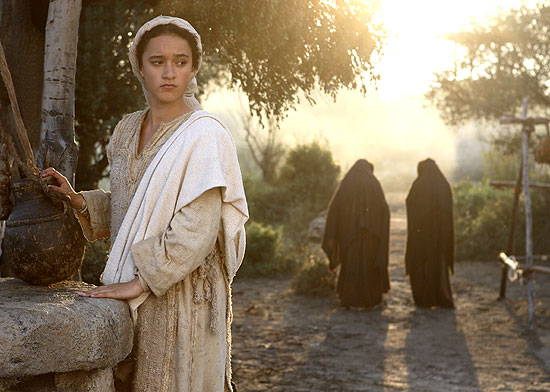
Saw "The Nativity Story"

I took my family last night to see The Nativity Story. I'm giving it 4 stars out of 5. It was beautifully filmed and reverently treated. Most of the plotting moves along kind of slowly. Some of it is unabashedly schmaltzy, but there were scenes that were quite moving. I'm not ashamed to admit that I shed a few man tears. (I told my son I had something in my eye.)

A few negatives. First, I didn't really care for using the magi as comic relief. And the film perpetuates the misunderstanding that the wise men came to the manger. Scripture actually says, of course, that they arrived later, perhaps a year or two later. But for me, this is a minor point.

I guess I was most disappointed with the angelic appearances. Especially disappointing was the event with the shepherds. Very lame. First, the dude cast as Gabriel was funny looking. And secondly, what's the biz with the voice on the wind? Gabriel should have been majestic, striking holy fear in those who see him. Since the angel is critical for the narrative, this is a substantial weakness of the movie.

Otherwise, the casting was superb. Herod was sufficiently creepy. Mary appears humble and holy. And what a terrific Joseph! This is the first time I've ever seen Joseph so well developed. Contemplating the much neglected role of Joseph certainly deepens one's grasp of the Christmas event.

I'm hoping you all go see this movie. Take your kids. They'll enjoy it and you can use it as an opportunity to teach them. Even moderate box office success will lead to future reverently made biblical pictures.

Sphere: Related Content

Monday, December 25, 2006

Christmas 06 Sermon

Christmas Day, 2006

Text: John 1:1-14

It’s striking how people can become accustomed to almost anything and begin to think of it as normal. Plato tells the story of men who are born in a cave who never see the sun. The only light they see is that cast by a fire lit and kept behind them at all times. The only forms they see are shadows of objects flickering against the wall in the dim firelight. But they don’t mind being in this state so much because they don’t know anything else. They’ve never heard of the sun, let alone seen it.

But then take these men out of their caves and bring them to the surface. What will be their reaction? Do you think they will thank you for showing them the light? Certainly not. They will squint with pain and wonder what torment you’ve subjected them to. Only with time, will their eyes adjust. And then everything will be different. They will experience colors and shapes and images they’d never imagined. They will enjoy beauty they didn’t dream could exist.

Some, however, will refuse to believe that this searing brilliance will ever amount to anything good and they immediately long to return to the comfortable darkness they’ve always known.

It’s sort of like the ancient Israelites who begged to be liberated from their bondage in Egypt but then immediately complained about the discomforts of the wilderness. And they began to pine to be back in the land of their captors where at least they ate onions and cucumbers and melons instead of that boring manna day after day. It’s not that they enjoyed the slavery when they were in Egypt, but they had hoped to get to the land flowing with milk and honey a bit quicker. They had no patience for the lifelong pilgrimage in between.

Jesus Christ is the light which gives life to men. The prophet foretold: The people who walked in darkness have seen a great light; those who dwelt in the land of the shadow of death, upon them a light has shined (Is. 9:2).” Men, however, love the darkness, even though it is killing them. The bright light of day is intimidating, demanding and overwhelming. And that’s because it changes you. St. Paul said that at the glorious return of Christ when the dead are raised and all those who are in Christ will be taken to meet him in the air, he said, “We shall all be changed.”

But I’m here to tell you that that metamorphosis has begun in you already. It is the seed planted in you at your baptism which will only fully flower on the day of your bodily resurrection from the dead when you shall be glorified.

The light of Christ is not just light in the sense of showing us the way. Psalm 119:105 says “Your word is a lamp to my feet and a light to my path.” So Christ is the light who illumines the correct path. But He is more than that.

Sunlight that strikes the leaves of a plant does not give instructions to the plant. It does not teach it what to do and how to be. No, the sunlight is the power which enlivens and awakens the plant, giving it health, and causing it to grow and bear fruit.

In a similar way, Jesus Christ is not just a moral guide telling us how to live better and more effective lives. He is the light which gives life. Jesus changes us from dormant seeds into vibrant blossoming plants full of color. But sometimes it hurts to change. Sometimes men prefer to be lifeless, barren and bland. We prefer the drabness of our sins because the Deceiver has convinced us that it is better that way.

This is one of the things I really love about The Chronicles of Narnia by C.S. Lewis, especially The Lion, the Witch and the Wardrobe. If you’ve read the book or seen the movie, you know what I mean. Under the control of the evil witch, the land of Narnia is stuck in perpetual winter; everything is frozen, covered in snow, with no warmth or joy or color. It’s always winter but never Christmas, they said.

That is, that’s how it was before the great lion Aslan arrived. Aslan, of course, is Lewis’s Christ figure in the stories. When Aslan comes, everything begins to change. The ground begins to thaw, flowers of yellow and purple and red begin to pop from the earth. Birds are singing, the sun is shining, and you can hear the flow and trickle of water around you. When Aslan came, the evil witch began to lose control of Narnia. It slipped from her spell and what was a barren wasteland metamorphosed into a garden teeming with life.

And that’s how it is with Christ. The devil freezes us. He imprisons us. He promises us that a life of sin will be happy, but it’s not. It’s dull and boring and the same old – same old all the time. Only with Christ does life begin to vibrate with color and warmth and interest.

The story of the birth of Jesus is not told in the Bible because it is sweet and makes us all warm inside. Even Martin Luther succumbed a bit to this kind of sentimentality in his Christmas sermons saying that God became a baby because who can resist a baby? No one is afraid of a baby, he said. Everyone loves a baby. I’m no exception. I love children. But the Son of God didn’t become a baby in order to charm us with his pudgy little knees and win our love by being cute and adorable.

As much as we all love this time of year and are so fond of the Christmas story, we must acknowledge that it’s not all red ribbons and sugarplums. There is much pain and suffering in the Christmas narrative if you have ears to hear. The ridicule which Mary and Joseph must have been subject to. The hard travel while 9 months pregnant. No room in the inn. This young girl, giving birth presumably without the comfort of her mother or family. Not to mention the madness and deception and vicious bloodshed of King Herod the Great.

The life of Jesus, even from the start, was characterized by suffering. Commemorating the martyrs this coming week reminds us that the cute and adorable baby is, in fact, the sacrificial lamb who will break his mother’s heart and be handed over to wicked men who will do unspeakable things to him before killing him for all to see. Aside from all the sweetness, this is a story about God getting serious about sin and its fatal consequences. This is a story about God rolling up his sleeves, and getting down amongst the problems of our world and doing something about them. Jesus was quite literally born to die.

They say that familiarity breeds contempt. I think it also breeds deafness. In the church, we hear these realities spoken and sung so often that we may at times fail to hear them. The baby of Bethlehem was always going to be killed on a cross. His crucifixion was not a mistake or a detour. It was the purpose of his incarnation, birth, and life among us. To shed his blood as a ransom for many, to offer his own life to rescue sinners from eternal damnation.

A Roman Catholic author whom I admire named Flannery O’Conner once said that for the hard of hearing, you must shout. She meant that for those who are morally and spiritually hard of hearing, it becomes necessary for the church to speak more boldly. So let’s enjoy our nostalgia, our Bing Crosby albums, our Jimmy Stewart movie. But let’s say out loud for all to hear that Jesus is God in the flesh come to rescue us and give us eternal life. He is, in fact, the light of the world, the light no darkness can overcome.

Christmas is more than just a birthday party for Jesus. It’s the recognition that God is in the business of saving sinners. When the angels announcing Christ’s birth sang about ‘good will toward men,’ they were not singing about people showing good will toward other people, but about God showing good will toward all of us. Instead of treating us as our sins deserve, God is in Christ, reconciling the world to himself.

It’s a wonderful life, when you think about it. Not the film. But life in Christ. In Jesus’ name. Amen.

Sphere: Related Content

Here's Trouble

(Rev. Scott Stiegemeyer, Rev. David Petersen, and Seminarist Jason Braaten)

Here we are after Divine Service on Christmas day. I preached. Pr. Petersen was the celebrant. And Mr. Braaten was our deacon.

This was the first time I'd ever worn a cope. It's pretty heavy. I wasn't able to flail my arms around in the pulpit like I usually do.

Mr. Braaten's newborn son was in church for the first time today. What an adorable baby! God bless them.

I always love coming to church at Redeemer. Pastor Petersen is a terrific preacher and the worship is always glorious. But I must say that the Christmas Eve service last night was especially amazing. The music was heavenly. Our Kantor, Dr. Reuning, is a very talented individual and his musicians are beyond good. And Petersen surpassed himself with a powerful and quite memorable sermon. (I wanted to punch him in the nose, however, when he told me today he slammed the sermon out in about an hour - with all due respect, of course. How do people do that? I have to grind sermons out. My muse gives nothing easily. It's like pulling teeth.)

The liturgy at Redeemer Lutheran Church has a reputation for being a bit more ornamented than what is typical for our denomination. Vestments, bowing, incense, and such. Some people like this and others criticize us. I will admit that I am not used to some of the rubrics. I'm no liturgical highbrow. But there is something truly satisfying in a service done in this manner. There is no question what we are doing. We're not casually hanging out with God. We are in the presence of the Almighty who comes bearing gifts.

Sphere: Related Content

Saturday, December 23, 2006

National Talk-Like-Jack-Bauer Day

January 15, 2007. I'm mentioning it now because I'm sure I'll forget about it if I don't. Check it out.

So how does one behave on National Talk Like Jack Bauer Day?

  • Take a helicopter to work.
  • Scream "There's no time for that" whenever someone asks you to do something.
  • Ask a co-worker for a hacksaw and lighter fluid with no explanation.
  • Trust no one except the mole, of course.
  • Ask "Who are you working for?" to people throughout the day.
  • ALWAYS SPEAK IN CAPS WITH EXCLAMATION POINTS!!!
  • Ask people to download stuff to your PDA.
  • Die, at least once.
  • Threaten to staples your boss's eyelids to his desk if he doesn't starting telling you the truth NOW!
What am I missing?

Sphere: Related Content

New Curriculum at Concordia Theological Seminary