

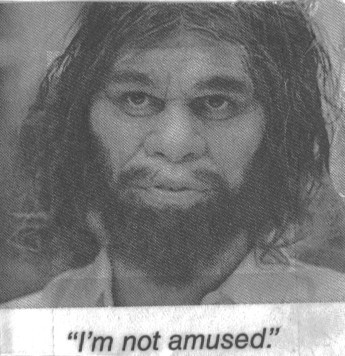
Aha! The best evidence that Darwinism is a farce is the skull of Charles Darwin himself. Look at these two photos. I see very little advancement btwn the caveman and the 19th century British naturalist. It just proves that Neanderthals never became extinct. One of them just wrote that they did.
Tuesday, February 06, 2007
Darwinism Debunked

Monday, February 05, 2007
Friday, February 02, 2007
Proverbs of John Lennon
I just visited the wonderful new public library in downtown Fort Wayne, IN. And, as expected, came home with a bag of books. I've been wanting to read a biography of John Lennon for some time and in searching for one, I came across a collection of his sayings. Here is one that immediately struck home for me:
Part of me suspects that I'm a loser, and the other part of me thinks I'm God Almighty.
At their best, artists assist humanity in understanding reality. Here John gives us all a helping hand. I think many many (if not all) people have this same dual consciousness, the feeling that one is worthless AND the feeling that one is the center of the universe. When you understand that this is the basic modus operandi of most people, it really helps you know how to apply God's Word to their lives.
Part of you needs to be comforted and assured of God's love and His kindness toward sinners. But the other part of you needs a swift kick in the britches.
Wednesday, January 31, 2007
From Vampires to Jesus
As you may recall, I am a fan of Anne Rice's novel about the childhood of Jesus. Here is a terrific review on the book by Dr. Gene Veith.
Monday, January 29, 2007
What is Next?
 I just finished reading the latest Michael Crichton novel. It's called Next
His other recent cautionary tale, Prey

To its credit, Next does bring attention to many of the troubling ethical and dangerous scientific implications of advancing genetic technologies. Crichton does not represent the religious concerns that many share, but he does highlight devastating potential abuses.
These issues sharpen even further when you understand human life to comprise more than just a random jumble of minerals and chemical reactions. A Christian author would see a much more three-dimensional problem with the current research trajectories. Nonetheless, it is useful for a secularist to observe many of the same problems and come to similar conclusions.
My problem with Crichton's latest book is not philosophical or theological. It's just not that great of a story, esp when compared to his other works. The characters are under-developed. The plot is uncertain and confused.
For a thoroughly Christian work of fiction asking very similar questions about science and human life, see instead P.D. James'The Children of Men
Saturday, January 27, 2007
Faith and Good Works
Martin Luther once famously wrote that you can no more separate good works from faith in the Christian than you can separate heat from light in fire. This pertains to classic Reformation teaching next to traditional Roman Catholicism (and ironically much of "evangelical" protestantism).
I think a Roman Catholic would want to stress that we cannot separate true living faith in Christ from a transformed life of holiness. We agree that these must not and cannot be separated.
However, even though faith and works cannot be sliced apart, they should be distinguished. Take the fire example once again. I cannot separate the heat from the light but I understand the distinction. Heat and light may be inseparable in fire but they are different and have different functions.
So when I want my plant to grow, I don't subject it to more heat, but place it in better light. And when I want my leftover pizza to taste better, I don't set it in the light, but apply some heat.
So even if faith and works cannot be separated in the life of the Christian, I understand them to serve different functions. Faith is the instrument by which I apprehend the benefits of Christ's life and sacrifice, namely forgiveness and salvation. Works are the natural outflow of living faith.
Tuesday, January 23, 2007
Bono on Elvis
If you enjoy the popular music of the last fifty years, you will love this feature from an issue of Rolling Stone magazine. The editors selected fifty legendary musical artists of the rock era and asked current stars to write brief reflections about them. It is a fun and fascinating read.
My favorite is the one on Elvis Presley written by Bono of U2. First of all, Bono is a genius with words. He has a very refreshing way of putting things. Read any of the scores of interviews he's done in the last twenty years and most of them will be full of rich expression, even when about the most mundane things.
Particularly, I was struck by Bono's observation that for Elvis, grace was not amazing enough. He says that in the context of describing the tortured interior life this megastar endured. Friends say that when Elvis was especially upset, nothing soothed him as much as going to be alone and singing old spirituals and hymns with his piano. And yet this was the drug addicted superstar who read the bible, loved his mother and shot the television in his living room.
Amazing grace. How sweet the sound that saved a wretch like me. It is a profound Christian reality but only if grace is understood for what it is. Grace is not a power that God gives us to become better people. If that were the case, then clearly his grace is insufficient. The evidence for most of us is that we do not become measurably better as time goes on. In some ways, yes. But remember C.S. Lewis who said that whenever I remove the big stones from my field, I just see the thousands of smaller ones that were there all along. And these pebbles are much harder to clear away, thus more pernicious.
God's grace is fundamentally His own mindset toward us. It is the favor He shows sinners on account of Christ. And this epiphany does indeed powerfully change us, but not ultimately until our own resurrection on the Last Day.
I feel bad for Elvis sometimes. I remember exactly where I was in 1977 when I heard about his death. He was certainly a talented man who loved his family, was a patriot, was moved by music and exhibited an abiding Christian faith. God's grace is amazing enough. How painful it is when even believers are taxed with despair.
Friday, January 19, 2007
Seminary Chapel Real Audio
If you would like to hear our seminary choir, the Kantorei, singing tune to the Concordia Theological Seminary website to listen. Click on Thursday. I was the preacher.
Sphere: Related ContentTuesday, January 16, 2007
Downers in the Media
Yesterday I posted an explanation of my appreciation for certain contemporary books and movies that deal with dark and depressing subject matter. And while a lot of current media do come from a particularly nihilistic mindset, dark and depressing have characterized great works of art for centuries.
- Oedipus Rex by Sophocles. Man sleeps with mother and murders father. Has his eyes gouged out. Lesson: don't defy the gods.
- Titus Andronicus by William Shakespeare. Perhaps the bloodiest and cruelest play ever written.
- Macbeth by William Shakespeare. Murder, guilt, sorcery, divination, treason.
- Othello by William Shakespeare. Deception, distrust, murder.
- Anna Karenina by Lev Tolstoy. Adultery, greed, selfishness, gruesome suicide
- Crime and Punishment by Feodor Dostoevsky. Axe murderer redeemed by a prostitute with a heart of gold.
- The Scarlet Letter by Nathaniel Hawthorne. Adultery, hypocrisy.
- The Tell-tale Heart by Edgar Allen Poe. Murder, guilt.
- Jude, the Obscure by Thomas Hardy. Adultery, depression, suicide.
- Moby Dick, The Great Gatsby, Farewell to Arms, and so forth.
Certain modern films, such as Fargo, Magnolia, and Match Point to name a few, treat the frailties of man in honest, interesting and even helpful ways.
What are your thoughts about classic and modern literature (and serious film) which deal with violence, sin, and the gruesomeness of life on earth? Any good examples I've missed?
Next, I'm thinking I'll write about why horror films are sometimes the most Christian movies made. Sphere: Related Content
Monday, January 15, 2007
Dark and Depressing Books and Films
Sometimes people ask me why I "like" books and movies that most people consider dark and depressing. I'm sure there is a sophisticated psychological reason, but my response is more theological.
I appreciate some books and films that examine disturbing subject matter. Occasionally, someone will quote St. Paul to me: "Finally, brothers, whatever is true, whatever is noble, whatever is right, whatever is pure, whatever is lovely, whatever is admirable—if anything is excellent or praiseworthy—think about such things (Philippians 4)." The apostle directs us to fill our minds with thoughts that are lovely, noble, pure and admirable. Indeed. But first he says, think on things which are true. And the truth is not always pretty or pleasant or uplifting. The truth can be gory and upsetting and awful.
I believe that just about all serious novels and films are theological in nature. Everyone is a theologian and a philosopher because everyone expresses views about the ultimate questions. Questions about God, life, death, right, wrong, relationships, love, damnation, etc.
This is not to say that all serious books and films express good theology or correct theology. There is a lot of false doctrine out there, to be sure. However, even a blind pig uproots an acorn once in a while. Artists - even unbelievers - frequently tap into holy truths, either intentionally or not.
Movies that deal with horrible scenarios, despicable people, and upsetting subject matter can do a lot of good in our society I believe. They can be effective preaching of the law. Everything is totally screwed up. People are basically screwed up. And there's nothing we can do about it. Not that I revel in the accusations and condemnations of the law. But in a culture that generally rejects the need for divine intervention, I think a little "dark" can prepare people for the gospel.
Thursday, January 11, 2007
Prime Time TV
I was happy to be on Issues, Etc. today to discuss trends and issues with current prime time television. Go and take a listen.
Sphere: Related ContentSunday, January 07, 2007
Going Home
The seminary Kantorei tour is now ended. I'm sitting now in Boston's Logan Airport waiting to begin the trek home to Fort Wayne.
What a terrific tour! It was a joy to be the preacher for our wonderful seminary choir. The people at the churches we visited responded so warmly and generously. I particularly enjoyed getting to meet the people who graciously housed us. I met so many wonderful Christians this week. This morning's concluding services in Boston were most edifying.
All that having been said, I am truly anxious to be home.
Wednesday, January 03, 2007
Stieg in Mahattan
That's Manhattan, NY and not Manhattan, Kansas, in case you were confused. Traveling with the seminary Kantorei, they sang and I preached last night at Redeemer Lutheran Church in Bayside. Tonight we go to Greenwich, Connecticut which is only about 25 miles away. This meant that both yesterday and today, we had time to explore NYC.
In the past two days, I got to see the Empire State Building, Rockefeller Center, Times Square, St. Patrick's cathedral, etc. I did so much walking around because the weather has been unseasonably warm and sunny. So my feet are dog tired. I could have seen more - museums and such - but I'm not that kind of traveler.
I like to go to see touristy things, including museums, when I travel but I can't stand trying to cram everything in at once. I like to take my time and maybe only do a few things at a time. That's enough for me. Especially if the trip is supposed to be a vacation, which this isn't.
Certainly, there is a fair bit of free time during the days of choir tour. Often, the choir would be trapped on a bus all day going from one location to the next. But since these New England stops are so near each other, transit time is relatively short. But so far, in my capacity as Admission Director, I have been able to touch base with 5 or 6 prospective students.
Monday, January 01, 2007
Liturgical Stuff: Why We Do It
When I was a pastor in Pittsburgh, for the first few years, I used to put a little blurb at the end of the Sunday bulletin called "Why We Do It." I should have kept doing it, but let it slip after a while. This was just a paragraph I wrote each week explaining the reason for some particular worship related practices. Why we bow at certain times. Why we make the sign of the cross. Why the pastor wears vestments. Why we take an offering. Why we stand for the reading of the Gospel. And so forth.
I got a lot of favorable responses to this, mostly from new church members, but also from life-long folks. What was the purpose? Sadly, the Lutheran church in America is experiencing nothing less than liturgical chaos. In our own biblically conservative denomination of Lutherans, the whole gamut exists.
I was talking with some seminarians this evening over beer and pizza about these matters. And here are a couple of my observations:
- Recognize that you can't know another man's motives for doing something. "Oh, he is just being showy." Or "That person has no respect for the history of the church." Assume the best of others' intentions.
- Give each other liberty. I won't judge you for not using incense or making the sign of the cross or using ashes on Ash Wednesday. Don't you judge me for doing so.
- Don't misunderstand my call for liberty as a defense of liturgical chaos. Just because I think some things are not points to fight about does not mean I think anything goes. Doctrine and practice go together. Faith and life. Belief and worship. Substance and style. These things cannot be divorced from each other. You reflect your beliefs in your worship practices.
Saturday, December 30, 2006
The Execution of Saddam
Most of you have seen video clips and photos of the hanging of Saddam Hussein. The death penalty is a controversial subject in this country. Most of Europe has eradicated it entirely. I know that the Vatican has condemned Saddam's execution though I have not yet read the reports.
Romans 13 is the traditional biblical text supporting the death penalty. God has established government to oversee law and order in a society. From my brief review of the Roman Catholic Catechism, the Church of Rome recognizes this God-given role of government but states that the imposition of the death penalty should be exceedingly rare.
Is it right to take the life of a mass murderer? Yes, it is. But it does not work as a deterrent. That's probably true although I don't know how anyone could know that for sure. But I don't support the death penalty because I think it will deter other criminals. But shouldn't we focus on rehabilitation? That's a great idea. But the fundamental role of government is to make and enforce laws, to protect the innocent and to punish the guilty. Punish.
Some crimes, such as mass murder, are so repugnant and reveal a character so corrupt that the only just response is to resort to capital punishment.
What about forgiveness? There are two realms. The realm of grace, the church. And the realm of law, the state. God is the ruler in both. But he works through them very differently. It is given to the church to preach the gospel and to absolve penitents. That is not and must not be given to the state. That's why we don't ask our governors to be evangelists or missionaries. And that is why judges should not absolve murderers, robbers, rapists, child pornographers, embezzlers, etc.
The state is to raise armies, enforce laws and punish wrongdoers. That is not given to the church. So the church must not imprison people, raise armies, or burn people at the stake.
Kantorei Schedule
| Sunday, December 31, 2006 |  | ||
| | 8:30 & 11:00 a.m. | St Paul's Lutheran Church 12022 Jerusalem Road Kingsville, MD 21087 Contact: Pastor Michael Wollman 410-592-8100 | |
| Sunday 31 December, 2006 | |||
| | 5:00 p.m. | Immanuel Lutheran Church 1801 Russsell Rd Alexandria, VA 22301 Contact: Pastor Christopher Esget 703-549-0155 | |
| Tuesday, January 2 | |||
| | 7:30 p.m. | Redeemer Lutheran Church 3601 Bell Blvd Bayside, NY Contact: Pastor Brian Hamer 718-229-5770 | |
| Wednesday, January 3 | |||
| | 7:30 p.m. | First Lutheran Church 38 Field Point Rd Greenwich, CT 06830 Contact: Pastor Jimmy Coffey Jr. 203-869-0032 | |
| Thursday, January 4 | |||
| | 7:00 p.m. | Immanuel Lutheran Church 154 Meadow St Bristol, CT 06010 Contact: Pastor H.L. Bridges 860-583-5649 | |
| Friday, January 5 | |||
| | 7:30 p.m. | Our Redeemer Lutheran Church 54 Cedar Swamp Rd Smithfield, RI 02917 Contact: Pastor Larry Nichols 401-232-7575 | |
| Saturday, January 6 | |||
| | 4:00 p.m. | St. Luke Lutheran Church 950 East Street Dedham, MA 02026 Contact: Pastor James Butler 781-326-1346 | |
| Sunday, January 7 | |||
| | 8:00 & 11:00 a.m. | First Lutheran Church 299 Berkeley St Boston, MA 02116 Contact: Elaine Laaser admin@flc-boston.org 617-536-8851 | |
| Sunday, January 14 | |||
| | 4:00 p.m. | Kramer Chapel | |
Friday, December 29, 2006
Bat House for Christmas
So I got my wife a bat house for Christmas? Wanna fight about it? Yeah, I'm a hopeless romantic. Her other gift was a set of diamond ear rings.
But seriously, the bat house. Check out Julie's blog on it.
Wednesday, December 27, 2006
Saw "The Nativity Story"
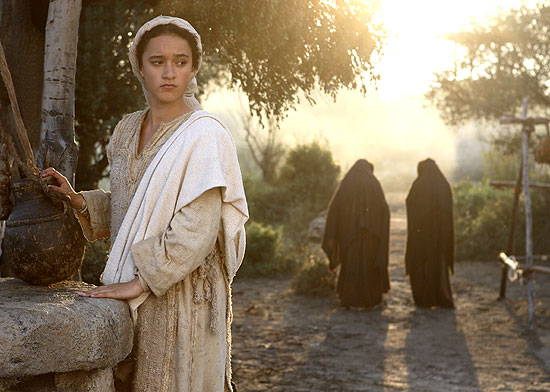 I took my family last night to see The Nativity Story. I'm giving it 4 stars out of 5. It was beautifully filmed and reverently treated. Most of the plotting moves along kind of slowly. Some of it is unabashedly schmaltzy, but there were scenes that were quite moving. I'm not ashamed to admit that I shed a few man tears. (I told my son I had something in my eye.)
A few negatives. First, I didn't really care for using the magi as comic relief. And the film perpetuates the misunderstanding that the wise men came to the manger. Scripture actually says, of course, that they arrived later, perhaps a year or two later. But for me, this is a minor point.
I guess I was most disappointed with the angelic appearances. Especially disappointing was the event with the shepherds. Very lame. First, the dude cast as Gabriel was funny looking. And secondly, what's the biz with the voice on the wind? Gabriel should have been majestic, striking holy fear in those who see him. Since the angel is critical for the narrative, this is a substantial weakness of the movie.
Otherwise, the casting was superb. Herod was sufficiently creepy. Mary appears humble and holy. And what a terrific Joseph! This is the first time I've ever seen Joseph so well developed. Contemplating the much neglected role of Joseph certainly deepens one's grasp of the Christmas event.
I'm hoping you all go see this movie. Take your kids. They'll enjoy it and you can use it as an opportunity to teach them. Even moderate box office success will lead to future reverently made biblical pictures.
Monday, December 25, 2006
Christmas 06 Sermon
Christmas Day, 2006
Text: John 1:1-14
But then take these men out of their caves and bring them to the surface. What will be their reaction? Do you think they will thank you for showing them the light? Certainly not. They will squint with pain and wonder what torment you’ve subjected them to. Only with time, will their eyes adjust. And then everything will be different. They will experience colors and shapes and images they’d never imagined. They will enjoy beauty they didn’t dream could exist.
Some, however, will refuse to believe that this searing brilliance will ever amount to anything good and they immediately long to return to the comfortable darkness they’ve always known.
It’s sort of like the ancient Israelites who begged to be liberated from their bondage in
Jesus Christ is the light which gives life to men. The prophet foretold: “The people who walked in darkness have seen a great light; those who dwelt in the land of the shadow of death, upon them a light has shined (Is. 9:2).” Men, however, love the darkness, even though it is killing them. The bright light of day is intimidating, demanding and overwhelming. And that’s because it changes you.
But I’m here to tell you that that metamorphosis has begun in you already. It is the seed planted in you at your baptism which will only fully flower on the day of your bodily resurrection from the dead when you shall be glorified.
The light of Christ is not just light in the sense of showing us the way. Psalm 119:105 says “Your word is a lamp to my feet and a light to my path.” So Christ is the light who illumines the correct path. But He is more than that.
Sunlight that strikes the leaves of a plant does not give instructions to the plant. It does not teach it what to do and how to be. No, the sunlight is the power which enlivens and awakens the plant, giving it health, and causing it to grow and bear fruit.
In a similar way, Jesus Christ is not just a moral guide telling us how to live better and more effective lives. He is the light which gives life. Jesus changes us from dormant seeds into vibrant blossoming plants full of color. But sometimes it hurts to change. Sometimes men prefer to be lifeless, barren and bland. We prefer the drabness of our sins because the Deceiver has convinced us that it is better that way.
This is one of the things I really love about The Chronicles of Narnia by C.S. Lewis, especially The Lion, the Witch and the Wardrobe. If you’ve read the book or seen the movie, you know what I mean. Under the control of the evil witch, the
That is, that’s how it was before the great lion Aslan arrived. Aslan, of course, is Lewis’s Christ figure in the stories. When Aslan comes, everything begins to change. The ground begins to thaw, flowers of yellow and purple and red begin to pop from the earth. Birds are singing, the sun is shining, and you can hear the flow and trickle of water around you. When Aslan came, the evil witch began to lose control of Narnia. It slipped from her spell and what was a barren wasteland metamorphosed into a garden teeming with life.
And that’s how it is with Christ. The devil freezes us. He imprisons us. He promises us that a life of sin will be happy, but it’s not. It’s dull and boring and the same old – same old all the time. Only with Christ does life begin to vibrate with color and warmth and interest.
The story of the birth of Jesus is not told in the Bible because it is sweet and makes us all warm inside. Even Martin Luther succumbed a bit to this kind of sentimentality in his Christmas sermons saying that God became a baby because who can resist a baby? No one is afraid of a baby, he said. Everyone loves a baby. I’m no exception. I love children. But the Son of God didn’t become a baby in order to charm us with his pudgy little knees and win our love by being cute and adorable.
As much as we all love this time of year and are so fond of the Christmas story, we must acknowledge that it’s not all red ribbons and sugarplums. There is much pain and suffering in the Christmas narrative if you have ears to hear. The ridicule which Mary and Joseph must have been subject to. The hard travel while 9 months pregnant. No room in the inn. This young girl, giving birth presumably without the comfort of her mother or family. Not to mention the madness and deception and vicious bloodshed of King Herod the Great.
The life of Jesus, even from the start, was characterized by suffering. Commemorating the martyrs this coming week reminds us that the cute and adorable baby is, in fact, the sacrificial lamb who will break his mother’s heart and be handed over to wicked men who will do unspeakable things to him before killing him for all to see. Aside from all the sweetness, this is a story about God getting serious about sin and its fatal consequences. This is a story about God rolling up his sleeves, and getting down amongst the problems of our world and doing something about them. Jesus was quite literally born to die.
They say that familiarity breeds contempt. I think it also breeds deafness. In the church, we hear these realities spoken and sung so often that we may at times fail to hear them. The baby of
A Roman Catholic author whom I admire named Flannery O’Conner once said that for the hard of hearing, you must shout. She meant that for those who are morally and spiritually hard of hearing, it becomes necessary for the church to speak more boldly. So let’s enjoy our nostalgia, our Bing Crosby albums, our Jimmy Stewart movie. But let’s say out loud for all to hear that Jesus is God in the flesh come to rescue us and give us eternal life. He is, in fact, the light of the world, the light no darkness can overcome.
Christmas is more than just a birthday party for Jesus. It’s the recognition that God is in the business of saving sinners. When the angels announcing Christ’s birth sang about ‘good will toward men,’ they were not singing about people showing good will toward other people, but about God showing good will toward all of us. Instead of treating us as our sins deserve, God is in Christ, reconciling the world to himself.
It’s a wonderful life, when you think about it. Not the film. But life in Christ. In Jesus’ name. Amen.
Here's Trouble
 (Rev. Scott Stiegemeyer, Rev. David Petersen, and Seminarist Jason Braaten)
Here we are after Divine Service on Christmas day. I preached. Pr. Petersen was the celebrant. And Mr. Braaten was our deacon.
This was the first time I'd ever worn a cope. It's pretty heavy. I wasn't able to flail my arms around in the pulpit like I usually do.
Mr. Braaten's newborn son was in church for the first time today. What an adorable baby! God bless them.
I always love coming to church at Redeemer. Pastor Petersen is a terrific preacher and the worship is always glorious. But I must say that the Christmas Eve service last night was especially amazing. The music was heavenly. Our Kantor, Dr. Reuning, is a very talented individual and his musicians are beyond good. And Petersen surpassed himself with a powerful and quite memorable sermon. (I wanted to punch him in the nose, however, when he told me today he slammed the sermon out in about an hour - with all due respect, of course. How do people do that? I have to grind sermons out. My muse gives nothing easily. It's like pulling teeth.)
The liturgy at Redeemer Lutheran Church has a reputation for being a bit more ornamented than what is typical for our denomination. Vestments, bowing, incense, and such. Some people like this and others criticize us. I will admit that I am not used to some of the rubrics. I'm no liturgical highbrow. But there is something truly satisfying in a service done in this manner. There is no question what we are doing. We're not casually hanging out with God. We are in the presence of the Almighty who comes bearing gifts.
Subscribe to:
Posts (Atom)


