Seminary Chapel Homily
October 9, 2006
Text: Hebrews 11:8-16
There is a scene in The Silver Chair by C.S. Lewis, part of The Chronicles of Narnia, where three of the characters face a dilemma. They’d been given a set of commands to follow from Aslan the Lion, Lewis’s Christ-figure. But there is one moment when to follow the command of Aslan appears as if it could mean their destruction. So the characters debate amongst themselves. Should we obey the command of Aslan or not? What will happen to us if we do?
So the first character asked the second, “Do you mean you think everything will come right” if we do this. And second character responds, “I don’t know about that…. You see, Aslan didn’t tell Pole what would happen. He only told her what to do. That fellow should be the death of us once he’s up, I shouldn’t wonder. But that doesn’t let us off following the Sign.” We are told throughout the Narnia series that Aslan is not a tame lion, but he is good.
In a similar way, there is no guarantee that following the commands of God will cause all things to go well in your life. In fact, you can almost count on the opposite to be true, that obedience will lead to suffering. Abraham did not know where God was leading Him. He did not know what would happen. For all he knew, God could have been taking him toward violence and disease and unhappiness. But then the words of Job come to mind, “Though he slay me, I will hope in him (Job 13:15).” We follow Jesus, not because He promises us an easy life, but because He is good. And because He has been good to us. Most especially by dying for our sins.
The Christian life can be compared to a journey. We are nomads who like Abraham walk by faith, who live in tents and look forward to a city with solid foundations. God has called us out of Harran toward the Promised Land. Out of darkness into light. Out of idolatry into truth.
Of course, when you travel, you can never be sure of the condition of your accommodations along the way. You might stay in a dilapidated place with cockroaches and dirty mattresses and stains on the carpet and no hot water. The smart traveler soon learns to bear such conditions because he knows them to be temporary. He knows that tomorrow night’s accommodations could be better or they could be worse.
Don’t become too settled in. For when you stay in a fleabag hotel, you don’t want to spend a lot of effort making the place more suitable. You won’t go out and buy new furniture for your room. You won’t paint the walls and replace the carpet. You won’t do those things, even if you could, because you know that this is just a stop along the way. Likewise, the Christian is an alien in a strange land. He’s never quite at home in this world.
So why set your heart on things which moth and rust destroy? The luster of this world’s treasures and trinkets has begun to tarnish already. We clamor foolishly for things which have no lasting value and neglect the eternal things.
A good example of this is popular televangelist Joel Osteen who wrote a bestselling book with the title Your Best Life NOW! It’s a theology of glory, a gospel of prosperity. He wants you to focus on the journey instead of the destination. People who say that the journey is the best part of the trip don’t really want to get to their destination very badly. The point of running a race is not the running. It is the prize at the end. Keep your eye on the goal, the fulfillment, the consummation. At best, people like Osteen will distract you and at worst, they’ll destroy your faith in God. One of the reasons people become disenchanted with Christianity is because they listen to fanatics who tell them to expect things from God which God has not promised to give. So one of you needs to write the book entitled Your Best Life is Yet to Come.
This is not mere escapism either. Pie in the sky when you die. Although what’s so wrong with escapism anyway? Is it strange for captives to desire to escape? Would it be better for prisoners instead to think only of prison cells and guards and bars on their windows? Doesn’t it make more sense for prisoners to look forward to the day of their release when they can see the blue sky and walk on the green grass? My friends, the stink of decay is all around us. It is a mark of true enlightenment to see that what the world calls progress is really regress, what the world calls life is really more akin to death and what the world calls freedom is really just another form of captivity.
That restlessness you feel, that sense that things aren’t right and that you don’t belong, that weariness with the world. To some extent, that is your heart pining for heaven. But sometimes I think we are not restless enough or at least not restless in the right ways.
Part of your task as preachers will be to stir up a sort of holy restlessness. In the liturgy, we have the sermon before the Eucharist for a reason, to make you hungry. Your preaching should make people desire the sacrament and likewise it should make people long for heaven, which is really pretty much the same thing. All good preaching is eschatological in the sense that it prepares us to die well.
Father Abraham was looking forward to the city … whose architect and builder is God. Many men throughout the ages have sought the golden city, the Shangri-La, the place where there will be no tears, or death, or sorrow, or crying. Sounds like Utopia. The word “utopia” comes from the two Greek words ou and topos, meaning “no place.” But there is such a place. Christ is preparing this place for us. You have a destination. You who have been baptized into Christ, you who have been pardoned by God. Your sins are forgiven. The power of Christ’s resurrection is pulsating through your bodies. You have been liberated from the tyranny of death and made free citizens of the Kingdom of God.
Shakespeare’s Hamlet fears the afterlife and calls it the undiscovered country and says the thought of death “makes us rather bear those ills we have, Than fly to others we know not of (Hamlet).” But death is not just a big dark mystery to us. The undiscovered country Hamlet refers to has been pioneered for us by our valiant Savior Jesus Christ. We have nothing to fear. He has civilized the wilderness. So we do not cling desperately to this mortal existence. No, the true sons of Abraham are longing for a better country – a heavenly one. In Jesus’ name. Amen.
Monday, October 09, 2006
Seminary Chapel Homily

Saturday, October 07, 2006
Potpourri
- Some pretty interesting information about the Australian Lutheran Church's recent debate over women's ordination. See here.
- Southern Baptist Theological Seminary discusses Holy Trinity and gender roles. Here.
- A nice memorial for Professor Kurt Marquart. Here.
Wednesday, October 04, 2006
Strange Work of God
In Lutheran theology, we speak of God's strange work (or alien work) and his proper work. His strange work refers to God's work of wrath and condemnation. His proper work - or that which most clearly reveals His character - is when He creates and pardons.
This manner of speaking can be seen in Isaiah 28:21:
The LORD will rise up as he did at Mount Perazim,
he will rouse himself as in the Valley of Gibeon—
to do his work, his strange work,
and perform his task, his alien task.
I think C.S. Lewis also figures this distinction out. In The Lion, the Witch and the Wardrobe, Aslan gives himself as a ransom to pay for the sin of Edmund. This must be so because, the story informs, of the "deep magic from the dawn of time" inscribed deeply upon the stone altar and upon the scepter of the Emperor Beyond the Sea. Aslan cannot and would never disregard this deep magic. Without the shedding of blood, there can be no forgiveness of sin. So the evil characters murder Aslan on the stone altar.
But then, Aslan overcomes death and is raised back to life. And when that happens, the stone table, the one with the deep magic deeply inscribed is broken in two. There's a loud noise. And to the surprise of the White Witch Queen, Jadis, Aslan is alive according to a deeper magic from before the dawn of time.
The breaking of the Stone Table signifies the passing of the old order and the dawn of the new. It is the sound of the stone rolled from the tomb. It is the curtain being torn. It is the the sound of the temple in Jerusalem being knocked down in AD 70.
Any thoughts on my comparison of the Deep Magic and the Deeper Magic with God's alien and proper work?
Sphere: Related Content
Tuesday, October 03, 2006
Here's a Thought
Thesis: A man who is uncertain of his identity will focus on his image.
Discuss.
Saturday, September 30, 2006
Reading Fiction a Waste of Time?
Every once in a while I talk to someone who thinks that reading fiction is a waste of time. Such a person might enjoy reading but only things that - as he might say - are real and true as opposed to fictional. This person sees no practical use for fiction. And of all the different genres of fiction, fantasy and fairy tale may appear to be the least practical of them all. After addressing a conference of librarians, C.S. Lewis was asked what practical use fantasy books such as his Chronicles of Narnia could possibly have for a child. Lewis responded that non-fiction is certainly a superb way to transfer information, such as how to build a boat. Fantasy might not help a boy to build a boat, but it would be immensely helpful should he ever find himself on a sinking boat.
The point is that the human imagination is important. And like all human faculties, our imagination is given to us by the Creator and can be used for good or ill. And it needs to be properly nurtured and exercised just like the intellect or the muscles of the body in order for it to be healthy.
What good is the imagination? It is the means whereby we can envision truths and possibilities that go beyond what may be perceived by the five senses. Those who see no use for fiction are in danger of being materialists. They become slaves to nature and have difficulty interacting with anything that stands above or outside of nature.
It comes down to the question of Pontius Pilate: "What is truth?" Is reading a book of science an encounter with the truth? Is reading a great novel or short story or poem a means of evading the truth? No, of course not. Scientific exposition can be filled with lies and falsehood as we find out every time "discoveries" are made which contradict previous assumptions. And poetry can convey enough beauty and truth to destroy worlds and transform lives.
I am often amazed and delighted at the unlikely places I find ingredients of truth. Even in fallen man, there are residues of understanding, vestiges of truth. So we should not be surprised to behold startling insights even in the artistic efforts of the godless. Chalk it up to natural revelation or imago Dei. Or to the dissipating fumes of Christendom. Sometimes the writers stumble onto truth accidentally. Sometimes they speak the truth unintentionally. Many times they do not even realize the full import of what they write. And other times, sensitive Christians are able to create portraits of human life by means of fiction or poetry that communicate reality more powerfully than other so-called more realistic types of writing.
Thursday, September 28, 2006
What's the Prob?
In my summer Siberian lectures on Christian ethics, I identified three outlooks that challenge a Christian ethos: Pragmatism, Relativism, and Individualism. Pastor Petersen made me think of this when he asked the interesting question: What controversy will define this time in the life of the church?
What do you think are the hottest issues facing the Church today?
Wednesday, September 27, 2006
Airline Security
I understand and support the increased security measure airports have undertaken for our safety. I get it. But as one who will be travelling a good deal in coming months and years, I dread the hours of stress going through the hoops.
So in light of the need for security and for the sake of making everyone's life simpler, I'd like to make a suggestion. I think all ticketholders should be required to fly naked and tranquilized. The airlines can issue nice fuzzy terry clothe bathrobes for the sake of modesty and comfort. Then a good strong dose of nitrous-oxide to every passenger with the amount precisely calibrated to keep everyone happy and "flighty" for the exact length of the flight. Not only would flying be completely safe, people would enjoy it more.
Tuesday, September 26, 2006
Who Said It?
Who said this and what movie is it from?
You know, I've always liked that word..."gargantuan"... so rarely have an opportunity to use it in a sentence.
Thursday, September 21, 2006







Wednesday, September 20, 2006
Differences Btwn Men and Women
I saw this over at Incarnatus Est. It's hilarious.
A guy named Roger is attracted to a woman named Elaine. He asks her out to a movie; she accepts. They have a pretty good time. A few nights later, he asks her out to dinner, and again they enjoy themselves. They continue to see each other regularly, and after a while neither one of them is seeing anybody else.Sphere: Related Content
And then, one evening when they're driving home, a thought occurs to Elaine and, without really thinking, she says it aloud: "Do you realize that, as of tonight, we've been seeing each other for exactly six months?"
And then there is silence in the car. To Elaine, it seems like a very loud silence. She thinks to herself: Gosh, I wonder if it bothers him that I said that. Maybe he's been feeling confined by our relationship. Maybe he thinks I'm trying to push him into some kind of obligation that he doesn't want, or isn't sure of.
And Roger is thinking: Wow, six months.
And Elaine is thinking: But hey, I'm not so sure I want this kind of relationship either. Sometimes I wish I had a little more space, so I'd have time to think about whether I really want us to keep going the way we are, moving steadily toward.... I mean, where are we going? Are we just going to keep seeing each other at this level of intimacy? Are we heading toward marriage? Toward children? Toward a lifetime together? Am I ready for that level of commitment? Do I really even know this person?
And Roger is thinking: So that means it was ... let's see ... February when we started going out, which was right after I had the car at the dealer's, which means ... lemme check the odometer ... Whoa! I am way overdue for an oil change here!
And Elaine is thinking: He's upset. I can see it on his face. Maybe I'm reading this completely wrong. Maybe he wants more from our relationship, more intimacy, more commitment. Maybe he has sensed -- even before I sensed it -- that I was feeling some reservations. Yes, I bet that's it. That's why he's so reluctant to say anything about his own feelings. He's afraid of being rejected.
And Roger is thinking: And I'm gonna have them look at the transmission again. I don't care what those morons say, it's still not shifting right. And they'd better not try to blame it on the cold weather this time. What cold weather? It's 87 degrees out, and this thing is shifting like a crummy garbage truck, and I paid those incompetent thieves $600!
And Elaine is thinking: He's angry. And I don't blame him. I'd be angry, too. Oh, I feel so guilty, putting him through this, but I can't help the way I feel. I'm just not sure.
And Roger is thinking: They'll probably say it's only a 90-day warranty. That's exactly what they're gonna say, the scumballs!
And Elaine is thinking: Maybe I'm just too idealistic, waiting for a knight to come riding up on his white horse, when I'm sitting right next to a perfectly good person, a person I enjoy being with, a person I truly do care about, a person who seems to care about me, a person who is in pain because of my self-centered, schoolgirl, romantic fantasy.
And Roger is thinking: Warranty? They want a warranty? I'll give them a warranty! I'll take their warranty and stick it....
"Roger," Elaine says aloud.
"What?" says Roger, startled.
"Please don't torture yourself like this," she says, her eyes beginning to brim with tears. "Maybe I should never have said ... Oh, I feel so...." She breaks down sobbing.
"What?" says Roger.
"I'm such a fool," Elaine sobs. "I mean, I know there's no knight; I really know that. It's silly. There's no knight and there's no horse."
"There's no horse?" says Roger.
"You think I'm a fool, don't you?" Elaine asks.
"No!" says Roger. He's glad he finally knows the correct answer.
"It's just that ... that ... I need some more time," Elaine says.
There is a long pause while Roger, thinking as fast as he can, tries to come up with a safe response. Finally, he comes up with one that he thinks might work.
"Yes," he says.
Elaine, deeply moved, touches his hand. "Oh Roger, do you really feel that way?" she asks.
"What way?" asks Roger.
"That way, about time," says Elaine.
"Oh," says Roger. "Yes."
Elaine turns to face him and gazes deeply into his eyes, causing him to become very nervous about what she might say next, especially if it involves a horse. At last she speaks.
"Thank you, Roger," she says.
"Thank you," says Roger.
Then he takes her home, and she lies on her bed, a conflicted, tortured soul, and weeps until dawn. Roger, in the meantime, gets back to his place, opens a bag of Doritos, turns on the TV, and immediately becomes deeply involved in a rerun of a tennis match between two Czechoslovakians he never heard of. A tiny voice in the far recesses of his mind tells him that something major was going on back there in the car, but he is pretty sure that there is no way he would ever understand what, and so he figures it's better if he doesn't think about it. (This is also Roger's policy regarding world hunger.)
The next day, Elaine will call her closest friend, or perhaps two of them, and they will talk about this situation for six straight hours. In painstaking detail, they will analyze everything she said and everything he said, going over it time and time again, exploring every word, expression, and gesture for nuances of meaning, considering every possible ramification. They will continue to discuss this subject, off and on, for weeks, maybe months, never reaching any definite conclusions, but never getting bored with it, either.
Meanwhile, Roger, while playing squash one day with Elaine's brother, will pause just before serving, frown, and say: "Bill, did Elaine ever own a horse?"
Tuesday, September 19, 2006
Professor Marquart in Paradise with Jesus
 "Precious in the sight of the LORD is the death of his saints." (Psalm 116:15)
A dear teacher and father in the faith, Kurt Marquart, has gone on to the church triumphant. The victory is ours through Christ our Lord.
What I always appreciated about Prof. Marquart was his clarity. He was able to speak about profound matters in ways that the careful listener could comprehend. Being his student was great joy. His unique sense of humor, his dignified manner, and his impressive intellect will be long remembered by Lutheran pastors and laity in America, Australia, Russia, and Haiti (among other places) where he frequently taught.
See here for more.
Monday, September 18, 2006
Real Sex
 Real Sex: The Naked Truth about Chastity

The title of her paper was "Allowing Sex to Be Ordinary." She observed that the sexual revolution has not only impacted our views on non-marital sex but also on marital sex. She challenged us to answer "what is good sex?"
Those who engage in non-marital sexual relations refer to it as exciting. It is a thrill precisely because it is illicit and unpredictable. In other words, the excitement is derived from its inherent instability.
On the other hand, married sex is often decried as dull and ordinary. Ms. Winner states that the difference btwn marital and non-marital sex is . . . excitement. And she argues that we Christians capitulate to the currents of our world when we believe that marital sex is only good when it more closely resembles non-marital sex. So all sorts of advice is given to "spice up" our bedrooms, going from embarrasing to bizarre.
But allowing sex to be ordinary is the more counter-cultural approach. Marital sex is good because it is comforting, familiar, clumsy and a natural part of domestic life.
Anyhoo, I thought she made some provocative points and now intend to read her book.
Sunday, September 17, 2006

Planners and Doers
I'm currently reading A Man in Full
In a shooting match, your motto ought to be: Ready, Aim, Fire.
For many of us, it ends up being either: Ready, Fire, Aim or Ready, Aim, Aim, Aim, Aim...
Are you the type of person who acts without thinking? You shoot before you aim? Or are the type of person who thinks and considers, then re-thinks and re-considers, and then thinks some more before making a move, possibly never even getting around the "fire" stage?
Thursday, September 14, 2006
Love Yourself, Hate Yourself, or Both?
 There is now hard scientific evidence that celebrities are narcissistic. Really?! See here. I think I also read about a new controversial study which has discovered that water is wet and another one that heat is hot.
An interesting sub-point of this study reveals that professional musicians - arguably the most highly skilled category of celebrities - are the least self-absorbed. And women from reality shows - the least talented - are the most self-absorbed.
"I was sort of amazed by this study," said narcissism expert W. Keith Campbell, associate professor of psychology at the University of Georgia.
Really?! I'm not a "narcissism expert" but I found nothing amazing about this at all.
Interestingly, the experts make a distinction between narcissism and egotism. Narcissists, they say, actually hate themselves and they are compensating. Egotists genuinely do believe they're the best since sliced bread.
Martin Luther identified man's problem as being "curved in on himself." One modern theologian said man is radically self-centered. How does that jibe with the report that so many suffer from self-loathing? That's easy to answer. The opposite of pride is not self-hatred. The opposite of egotism is not narcissism. In fact, self-hatred is really just another form of self-worship because it all centers on the self.
Sinful pride is when one loves oneself above all things. And everyone is guilty of that, even if they loathe everything about themselves. Humility, on the other hand, is not self-deprecation. Humility means to not think of oneself at all.
Sunday, September 10, 2006
Memorable Preaching
 When I departed from my con-
gregation in Pittsburgh, people said they hoped I'd still have occasion to preach. I will, but for now I am enjoying hearing good preaching for myself.
I have often thought about what are the necessary ingredients for good and effective preaching. Most fundamental, of course, is that the message remain Christ-centered; properly distinguishing law and gospel; highlighting the cross, forgiveness and justification; sacramental; ecclesial; and eschatological.
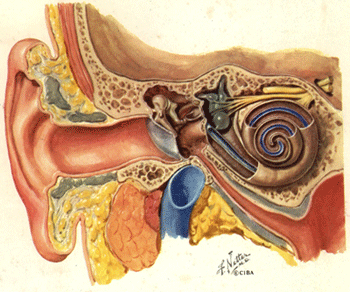
That having been said, the most orthodox preaching in the world helps no one if it is not heard. And hearing means more than simply that the sound waves vibrate the eardrums. Hearing includes understanding. Or as Jesus would say, you can have ears and still not hear or eyes and still not see.
In the post below, I mention two outstanding sermons that I heard today. What made them outstanding? A number of things. But one thing that stands out is that they were clear. It seems to me that what taints much of the Lutheran preaching I have heard is that it lacks clarity.
To me, this is the most difficult part of sermon preparation. I can write textual and orthodox sermons. That is relatively easy. What is less easy - at least to me - is to compose text for the ear instead of for the eye. Writing for the ear is a different skill than writing for the eye. When you are reading a page, you can go at your own pace. You can pause to think. You can re-read complicated sentences. But when you listen to oral exposition, you do not have those luxuries. We preachers need to keep that in mind. Preachers can have quite varying styles and still remain effective communicators. But however you do it, people need to be able to leave the building and know what they've just heard. It troubles me when a person listens, truly sits and listens to a sermon, but can't tell you much about it one hour later.
Part of the responsibility falls to the person in the pew, of course. Get enough sleep on Saturday night. Don't come to church expecting to be entertained. Pray for the ability to receive and understand God's Word. And be an active listener. Take notes, if it helps. I often do.
But preachers can't content themselves with writing orthodox manuscripts, though that is certainly essential. I'm not advocating that we water down the message. I'm not saying you have to dumb everything down to the lowest common denominator. I am saying that people today have more difficulty following oral presentation than they did a hundred years ago and so we generally perform a dis-service from the pulpit when we write like Victorians. Oh, that's not always the case. Congregations differ widely. And what you may be able to pull off quite well, may flop for me. And vice-versa.
I have heard and read sermons that used humor effectively and others that belittled the gospel with flippancy. No man should enter a pulpit unless he does so with fear and trembling. Sometimes illustrations do help to make a point. Other times, the preacher merely uses the biblical text as a pretext. The tail wags the dog. And the illustration becomes a point of its own. Cliche and trite expressions deaden the mind. Avoid them like the plague (wink).
A sermon that speaks should have meaty content, but should resonate with the average person. Don't be a clown, but watch out for the dreaded "pulpit tone." Be dignified but not hifalutin.
Two Outstanding Sermons
I heard two outstanding sermons today from two different preachers.
- This morning at Redeemer, Pastor Petersen offered a homily on Luke 10:25ff. Jesus said to love our neighbors as ourselves and the man asked, "who is my neighbor?" Pr. Petersen reminded us that everyone is our neighbor. No loopholes and no exceptions. Everyone is Jesus' neighbor and He loves us as He loves Himself.
- Then later today, President Wenthe preached at the opening service at which I was also installed. In his sermon, he talked about having perspective. Depending on one's perspective, a thing can be either a blessing or a disappointment. Then he emphasized that a Christian gets his perspective from God's house. What is the lens through which to correctly view God, ourselves and the world? Preaching and Sacrament.
Saturday, September 09, 2006
More Jesus Movies
 16 year old Keisha Castle-Hughes (Whale Rider) plays the mother of God in the upcoming film due out in December 06. It's called The Nativity Story. Originally the title was going to just be Nativity. I wonder why the name change.
Readers of this blog know that I am a fan of the Anne Rice novel, Christ the Lord: Out of Egypt.
Friday, September 08, 2006
How Do You Address Your Pastor?
When I was a pastor in Pittsburgh, lots of people in the community called me "father." Pittsburgh is a heavily Roman Catholic area. I never stopped anyone or "corrected" them for this. Although addressing a Lutheran pastor as "father" is uncommon in the US, there is nothing wrong with it.
If someone asked me how I wish to be referred to, I'd say, "Call me Pastor or Pastor Stiegemeyer. Just don't call me late for supper."
When I introduce myself, I always just give my name and position. "Hi. I'm Scott Stiegemeyer, the pastor at such-and-so" or "I'm Scott Stiegemeyer, the Director of Admissions." I seldom use the word reverend of myself. Though I always refer to other clergy that way.
Sometimes, people would call me "Pastor Scott." Again, I think that's simply because of it being common in Roman Catholicism.
Occasionally people skip the titles altogether and just called me by my first name. I really never had this happen much. It seems to me that a pastor should not insist on respect or the use of honorifics for himself. Jesus never told anyone, "That's Reverend Jesus to you."
I consider myself fairly traditional. I am generally unhappy with the decline of manners in our society. And I certainly believe the pastoral office should be honored. But while I will make a fuss over respecting my fellow clergy, it is unseemly for a pastor to demand respect for himself.
Patient in Persistent Vegetative State is More Aware than Imagined
So here is a case in England of a woman who has been diagnosed as being in a persistent vegetative state, similar to Terri Schiavo. New tests now show that this british patient has more mental awareness than her doctors had thought. The article states:
Lead researcher Dr Adrian Owen said: "These are startling results. They confirm that, despite the diagnosis of a vegetative state, this patient retained the ability to understand spoken commands and to respond to them through her brain activity."I can't say how or if these findings relate to the Schiavo case. But it does demonstrate that doctors do not always know what they are talking about. They are constantly learning new things and daily updating and revising their findings. Which is why so many of us who believe that all human life is to be valued wanted to protect Mrs. Schiavo from her husband's desire to starve her to death. Sphere: Related Content


