This is the slogan I have heard used to defend abortion, euthanasia, the legalization of marijuana or narcotic use, even prostitution. "It's my body, so no one can tell me what to do with it." But is that actually true? Not in the understanding of Christianity. Our Scriptures state: "Or do you not know that your body is a temple of the Holy Spirit within you, whom you have from God? You are not your own (1Co 6:19)."
That passage applies to Christians, but it is true of all people that God has given us our bodies and lives, not to abuse selfishly or to terminate at will, but to put into service of our neighbor.
But it just sounds so un-American to say that you are not your own to do with as you please. We freedom-loving people run the danger of making an idol out of personal liberty.
A few weeks ago, my wife and I were watching some news coverage of the Michael Jackson trial and I commented on how strange he looks these days. We've all seen the photos of Mr. Jackson today alongside photos from 5, 10, 20 years ago. The man has had plastic surgery, to an extreme. His nose is so narrow, he looks disfigured. And I told my wife that I could not understand why any doctor would agree to do that to him, even at Jackson's request. Does the argument that "it's my body" really have no limits? What about a doctor who agrees to amputate a healthy arm or leg, because the patient/consumer wants it done - for sick reasons? Want to read something grisly? Check this out.
Wilfred McClay, over at Mere Comments, makes some enlightening observation on ethics and the limits of personal liberty.
Thursday, July 14, 2005
"It's My Body!"

Wednesday, July 13, 2005
Can Technology Save Us or Not?
Hey all you sci-fi geeks out there!
I'm preparing some presentations that I'll be giving for the Higher Things Youth Gathering in St. Louis next week. And right now, I'm thinking about the genre of science fiction. It seems to me that there are mainly two types of science fiction.
The first type is optimistic about human nature and our use of reason and posits that mankind will gradually evolve and, by means of science and technology, solve all our problems. Under this category, I'd include Gene Roddenberry's Star Trek series and movies.
The second type is pessimistic about human nature and serves to caution us against the folly of placing too much faith in science and technology. Under this category, I'd place Andromeda Strain, I Robot (the movie), Westworld, and Frankenstein.
Movies like Star Wars seem to me to fit better under the fantasy genre. They contain advanced technologies, but the stories aren't about the technology and its potential for good vs. its risks. They're about the characters and the technology is mainly a part of the setting.
Anyone have thoughts to share on this subject?
Tuesday, July 12, 2005
My "Probably the Best Song in the History of the Whole World"
My pal, Bunnie Diehl, has graciously tagged me to come up with the best song - and I quote - "in the history of the whole world." You should check out her list. I'd say it's eclectic, but eclecto-freaky is probably more apt. And she said I can name more than one. I'll stick with pop/rock songs. So fasten your seat belts, 'cause here goes nuthin...
- Free Bird by Lynrd Skynrd. Seems an obvious choice, I know. But it still moves me. Get the movie Duets and check out Andre Braugher doing it a' cappella. It's way good.
- Tom's Diner by Suzanne Vega. Always makes me wistful.
- Don't Bring Me Down by Electric Light Orchestra
- Mr. Blue Sky by Electric Light Orchestra. I really fell for this one watching Eternal Sunshine of the Spotless Mind.
- Save Me by Aimee Mann. She almost won the Oscar for this song from the Magnolia soundtrack. We saw her in a live outdoor concert a couple of weeks ago. We had great seats. It was a beautiful evening. And she was incredible. O happy day.
- Sgt. Pepper's Lonely Hearts Club Band by the Fab 4. Or Let It Be or Hey Jude or Twist and Shout.
- Johnny B Good. The Jimmi Hendrix version. I went to the Rock 'n Roll Hall of Fame and saw the footage of him playing this and it completely floored me.
- I Got a Woman by Ray Charles. Rent Ray and tell me if you don't think Jamie Fox was so good it's scary.
- Moondance or Domino by Van Morrison. My wife and I often say that we just don't have enough Van Morrison in our life.
- Sunrise by Norah Jones. It really makes me feel like the sun is rising. But I also like her Don't Know Why.
- Train Song by Mindy Smith. Also Come to Jesus. She's got a voice and style that is just warm and comforting.
- I've Been Everywhere by Johnny Cash. I used to hate him. Now I can't get enough of him.
- Who Are You by the Who. Who? Saw them do this at the concert for America in New York after 9/11 and my feet began to dance. All by themselves. It just happened.
That was fun. So now I tag Pastor Tom Chryst, Pastor David Petersen, and Pastor Greg Alms. Sphere: Related Content
Monday, July 11, 2005
Is There a Global Over-Population Problem?
In 1968, Paul Ehrlich wrote a spooky book called The Population Bomb, in which he theorized that, left unchecked, the world's population would increase to a point where it can no longer sustain itself. It sounded reasonable. He predicted that in the 1970s and 80s, hundreds of millions of people would starve to death. Of course, this never happened. Super-sized Americans don't appear to be going hungry. Not that there haven't been famines and people who've starved. But it's not the global pandemic predicted.
While global over-population is a myth, I posit that there IS a population bomb, but the question is "Who is bombing whom?"
I'm here summarizing statistics from a Newsweek article, but don't hold that against me. I've seen this data in numerous places.
Consider this:
* Global fertility rates have dropped in half since 1972, and are continuing to drop
* Estimates are that the world's population will rise from today's 6.4 billion to around 9 billion in 2050. But after that, it will go sharply into decline.
* Birthrates in England, Ireland, Spain, Germany, Italy, Russia and other European countries is well below the rate needed to maintain population. Vladimir Putin has called this a "national crisis."
* The same is true for Japan and other east Asian nations.
* Current population growth in most of Europe - wheresoever it is growing - is due to immigration, a high percentage of which immigrants are Muslims.
* There are some areas which do have a high birthrate. The United Nations projects that the Middle East will double in population over the next 20 years.
* Saudi Arabia has one of the highest fertility rates in the world.
On the basis of this data, I think it's reasonable to fear for the future of what we like to call Western Civilazation.
It's risky to prognosticate, but most will agree that population decline will have serious economic and social repercussions for a country. At the same time, there are radical elements who claim that humanity is a virus and the source of most problems and believe that drastically reducing population is a good idea.
For more information, Charles Colson has an interesting piece here called Wolves in Berlin: Europe's Demographic Crisis.
And I highly recommend looking at the Population Research Institute at www.pop.org (I'm having trouble getting the link to work).
Saturday, July 09, 2005
Cheep! Cheep! by Julie Stiegemeyer

Forgive the shameless plug. But my wife's latest children's book is now available through Bloomsbury and can be pre-ordered through my Amazon link on the right sidebar. With adorable illustrations from Carol Baicker-McKee, this is a must have for kiddies 1-3 years old.
Intelligent Design: What's the Meaning of Life?
I came across the blog of Denyse O'Leary, a journalist based in Toronto, Canada and I encourage you to give it a look. She covers stories on the current scientific controversy between neo-Darwinists and Intelligent Design theorists.
I first noticed her when I read this article from Christianity Today Online about the film entitled, The Privileged Planet: The Search for Purpose in the Universe based on the book by philosopher Jay Richards and Iowa State University astronomer Guillermo Gonzalez. Apparently, the Smithsonian Institute had agreed to allow an Intelligent Design organization to show the film, but then tried to renege when the Darwinists complained.
The Intelligent Design (ID) movement is simply the attempt to examine evidence of design in nature, which suggests some higher intelligence behind it all. It seems to me that a fair-minded person in the public square is willing to study all the data and theories regarding the origins of life. If the data and theories are scientific in nature, then they belong in the realm of science (as opposed to philosophy, for instance, though the two may certainly overlap). See my earlier post. ID proponents are, as far as I can tell, asking for the opportunity to enter the debate, to not be silenced merely because they fail to toe the line of neo-darwinist orthodoxy.
Thursday, July 07, 2005
Too Much Sin-Talk?
The folks over at Be Strong in the Grace have kindly linked to me several times and today I return the favor. Look over the whole site, but check out this insightful post in particular.
Sometimes folks say they get tired of hearing preachers talk about sin and want to hear more about the love and joy of the Christian life. Now there are certainly some churches that do deliver fire and brimstone without letting the message of God's mercy predominate. And that's not good.
But it's important to point out that the joy of Christianity is only found by first paying attention to the seriousness of our need for God's grace in Christ. A person in a cancer ward might get tired of hearing all about those nasty cancer cells and malignancy and radiation and other such unpleasantness. And he or she might express a preference to hear happy stories about health.
Certainly, we want the patient to experience health, but that won't happen if we downplay the malady. Instead, we want to take an honest hardy approach to facing the disease SO THAT we can get on with the healing. Making light of the cancer won't REALLY lead to health. Only a poor facade. God is going to make you feel good (with the Gospel) but only after making you feel bad (with the Law).
London Has Been Attacked
 God Save the Queen!
With deepest heartfelt sympathy, we pray for the families of those killed and injured in today's barbaric murderous attack.
Wednesday, July 06, 2005
United Church of Christ Officially Endorses Same-Sex Marriage
According to this article from the Seattle Times, the UCC (sometimes thought to stand for "Unitarians Considering Christ") is now, at 1.3 million members, the largest American denomination to officially support gay marriage. But they might not bear that distinction for long. The Evangelical Lutheran Church of America (ELCA), 4 or 5 times the size of the UCC, is set to take a similar vote this summer as well.
The Rev. John Thomas, President of the UCC, thought that it was appropriate the controversial vote took place on July 4th saying that they had "acted courageously to declare freedom." The UCC may consider their "Declaration of Independence" from the immutable law of the Creator to be an act of courage, but it seems foolhardy to me. What kind of church boasts of trashing Scripture as well as disregarding natural law? The reports suggest that some of the more biblically conservative members of the UCC may be taking a hike.
When the British surrendered to the Revolutionary Army in Yorktown, their band played The World Upside Down as they filed past the Americans. Sometimes I think I'm hearing those chords myself.
Tuesday, July 05, 2005
Rick Warren and the Moral Influence Theory
According to Rick Warren in his The Purpose Driven Life, many of you do not need any more Bible study. That's what he says on p. 231:
The last thing many believers need today is to go to another Bible study. They already know far more than they are putting into practice. What they need are serving experiences in which they can exercise their spiritual muscles.I couldn't disagree more. The problem many churches face is not an overload of Biblical knowledge, but a deficit of it.
A person could try to explain comments like this one away by saying, "Well, that's not what he meant. He meant that, essentially, faith without deeds is dead." Even if that were the best construction, it is still at best, a sloppy, misleading statement. All of us are prone to making unpolished statements that we later want to clarify. I understand that. Sometimes conservative Christians are guilty of relentless nit-picking, but the quote above is just one of a thousand examples of Warren putting his foot in his mouth, and one of the more benign examples at that.
Here's one that troubled me even more:
If you want to know how much you matter to God, look at Christ wit his arms outstretched on the cross, saying, 'I love you this much! I'd rather die that live without you.'There are several different ways that theologians have described the work of Christ upon the cross. These are called the theories of the atonement.
God is not a cruel slave driver or a bully who uses brute force to coerce us into submission. He doesn't try to break our will, but woos us to himself so that we might offer ourselves freely to him. - p. 79
One is the Christus Victor theory. This is the notion that by dying and rising, Christ's main feat was to vanquish the devil. It was a cosmic battle and Christ is the victor.
Another theory is the idea of Forensic Justification. This is the view that the cross is chiefly about God the Father acquitting sinners because Jesus, His Son, took their penalty upon Himself.
And a third theory has been called the Moral Influence theory. This is the belief that the cross is mainly God's way of showing us just how deeply He loves us in the hopes that this display of affection will melt our hearts so that we freely embrace Him.
There is, of course, truth to be found in all of these theories. But of the three listed above, the Moral Influence theory is by far the weakest and least biblically attested. And yet, that is the approach Warren uses in the above citation. God does demonstrate His love by means of the cross, but Jesus' death is not a Hallmark card (caring enough to send the very best). It is a blood sacrifice to appease God's wrath for our sin.
The Purpose Driven Life makes some good observations here and there. But it is not a Christ-centered book. The clear gospel message is barely visible, buried and obscured with the anecdotes, principles for living, and rampant scripture quotations twisted from their context.
P.S.
St. James wrote: Not many of you should presume to be teachers, my brothers, because you know that we who teach will be judged more strictly (3:1)." Being a pastor of a Christian congregation and writing a book (or blog) puts one in the public eye. Some have said, "Leave the man alone. He meant well. And beside, his book has helped a lot of people." God can use very weak earthen vessels to accomplish His purposes, but that does not excuse a pastor from mis-using and mis-applying Scripture. It would be wrong and pastorally irresponsible not to point errors out. Sphere: Related Content
Sunday, July 03, 2005
It's Not a Fashionable Disease
HIV-AIDS is a terrible disease. And it is spreading in Africa at an alarming rate. I hope that research will advance to find better treatments and a cure.
That having been said, the President of the Evangelical Lutheran Church in the Sudan spoke at my church last winter and he alerted us to an equally horrific disease that is much less well publicized. Malaria. He told us that in his country, the UN is reticent to provide assistance for battling malaria because most/all of their attention is on HIV-AIDS. He also informed us that hundreds of children die from malaria in his town every year, but not one has died of AIDS. Clearly, there is a need for helping people with both afflictions.
That is why I was delighted to read this story. President Bush is pledging $1.2 billion for fighting malaria in Africa. Over a million people die every year in Africa from malaria, most of them children.
I feel sympathy for anyone dying from AIDS and believe they should be shown compassion and helped. But frankly, there is a very easy way to prevent the spread of AIDS. It's called chastity. But there is NOTHING you can do in Africa to keep from getting bit by mosquitoes.
Saturday, July 02, 2005
Back From Christian Worldview Conference
I highly recommend the annual Christian Worldview lectures held at the Schwan Center in Trego, WI every summer. It was a bit inconvenient to get to for me. I drove from Pittsburgh to Cleveland (to get a better flight) and flew into the Twin Cities. Then I rented a car and drove another 2 1/2 hours, in the pitch dark forests of nothern Wisconsin. But it was worth it.
The Schwan Center is a comfortable lodge surrounded by beautiful lakes and woods. I even saw a black bear. The food was exceptional. The speakers were scholarly and their presentations were very informative and beneficial.
If you have questions, put them in the comment box. Here is a brief summary of the lineup I enjoyed:
- Monday - The Confessional and Biblical Worldview (6 hours) by Dr. David Jay Webber of the Lutheran seminary in the Ukraine
- Tuesday - The Church and Science through the Ages: Seven Key Questions from the History of Science (2 hours) by Dr. Ryan MacPherson
- Wednesday - The Crisis of the Constitution: From Biblical Absolutes to Evolutionary Humanism (2 hours) by Dr. John Eidsmoe
- Thursday - The New Polytheism (3 hours) by Dr. Gene Edward Veith
- Friday - Islam's Unrecognized Threat to Christianity and the West (2 hours) by Dr. Alvin Schmidt
Tuesday - The Purpose of Science: Sacred Cow or Sacred Calling? (2 hours) by Dr. Angus Menuge
Tuesday - Teaching Objective Morality to a Postmodern Audience (2 hours) by Dr. MacPherson
Thursday - Dealing with Constructivism and Pantheism in School Textbooks (3 hours) by Dr. Allen Quist
Friday - Religions in America - Where Are We Going? (2 hours) by Dr. Mark Braun
Friday - How Christianity Changed the World (2 hours) by Dr. Alvin Schmidt
Thursday, June 30, 2005
Moralistic Therapeutic Deism
Today, at the worldview conference I am attending this week, Dr. Gene Edward Veith spoke to us about a new book called Soul Searching: The Religious and Spiritual Lives of American Teenagers by Christian Smith and Denton Melinda Lundquist.
It seems that the authors have concluded that the majority of American teens, including those who are active members of conservative churches, basically live by a creed which the authors are calling Moralistic Therapeutic Deism.
The basic tenets of this creed are:
- God created the world.
- God wants us to be good.
- God wants us to be nice.
- The central goal of life is to be happy.
- God does not generally interfere in a person's life - except when one has a problem (this is what I call the Divine AAA Membership).
- And finally, good people go to heaven.
I'm sure that Smith and Lundquist are correct in their assesment of American teenagers. But, with Dr. Veith, I would not limit it to them. I'd say that is how a large percentage of adults think as well.
Except for the first two tenets listed above, none of them are Christian statements. Would it surprise you if I said that the main message of Christianity is not "be nice to people?" It certainly appears that most of the people who actually met Jesus didn't consider Him a nice person. Let's be honest, most of the people who met Jesus found Him offensive. His own disciples were frequently embarrassed by His shocking and unpredictable actions and utterances. If being nice means comporting yourself in such a manner that most people like you, Jesus was not, by that standard, a nice man. And neither are His disciples. Christ warned His hearers to count the cost of following Him for they will be despised by the world even as it despised Him.
The main message of Christianity, you see, is that we are all objects of God's wrath on account of our sin and that God's Son, Jesus, has atoned for our sins so that we may be eternally pardoned. And when this message is communicated, especially the first part, people do not usually thank you for it.
In Moralistic Therapeutic Deism, God's chief interest is to make you happy. The reality is that our greatest happiness is found on the far side of great sorrow. God has to make us unhappy (by revealing the gravity of our sinful condition) before making us truly happy (by absolving us for the sake of Christ). In other words, God has to kill us before He makes us alive.
Sphere: Related ContentTuesday, June 28, 2005
Intelligent Design: Just the Facts Ma'am
Well friends, I write to you from the woods of Northern Wisconsin as I am attending a week-long conference here. Today I heard a stimulating lecture on the Intelligent Design movement (ID) by Dr. Angus Menuge, professor of philosophy at Concordia University, WI. If you've ever heard Dr. Menuge then you know that he is not only very knowledgeable and articulate on this subject but has a lively sense of humor as well.
Dr. Menuge was one of over 15 expert witnesses who talked at the recent hearings in Kansas over the teaching in the public schools of alternative scientific theories about the origin of life. His testimony can be found here.
The Intelligent Design movement is one aspect of the current scientific controversy over Neo-Darwinism. ID, in short, is the scientific recognition of evidence of design in all living organisms. The Neo-Darwinist ideologues refuse to admit that a controversy even exists in spite of a growing body of scholarly literature.
Not long ago, the famous British scientist, Anthony Flew, converted from atheism to theism because, as he himself stated, he determined to follow the evidence wherever it lead him. I applaud his intellectual honesty.
The ID proponents are not asking for the advocacy of any particular religious beliefs in the classroom, only that both sides of this legitimate scientific controversy be presented without bias.
According to Dr. Menuge, one of the individuals at the hearing disapproved of teaching the controversy for fear that it might "confuse" the children. As Dr. Menuge commented, that would be like deciding not to explain the two party political system of American government because it's just too doggone confusing.
Sunday, June 26, 2005
Researching Embryonic Stem Cells Unnecessary
Scientists from Children's Hospital of Pittsburgh announced in a press release last Thursday that adult or post-natal stem cells have the same ability to multiply as embryonic stem cells. This is highly significant because of the moral problems associated with using stem cells from human embryos. Basically, this means that there are no advantages to using embryonic cells over adult cells, as was previously believed, and one would hope that research using the stem cells from human embryos would therefore cease.
One other huge advantage to using adult stem cells is that they can be taken from the patient himself which would eliminate the risk of rejection. Embryonic stem cells are foreign organisms which the patient's immune system would attack.
People in the pro-life movement have opposed embryonic stem cell research on the grounds that is is wrong to kill human beings for the purpose of conducting experiments on them, even if those experiments would ultimately benefit some people.
The conclusion is that in addition to being immoral (which is reason enough to stop), researching therapies using embryonic stem cells offers no unique benefits and may actually be the less effective strategy.
But don't take my word for it. Read this from some of the world's top researchers in the field.
Saturday, June 25, 2005
Friday, June 24, 2005
Is Death a Natural Part of Life?
No. It's not. Not if by natural one means that death is the design of the Creator or that it's what is "supposed" to happen to us and thus OK. Every mourner knows that death is not OK. When God created Adam and Eve in the Garden, it was not His purpose for them to die. Death is a result of our sinfulness (sin came into the world through one man, and death through sin, and so death spread to all men because all sinned - Romans 5). And that's why we hate it. Because it is un-natural. And I'd suggest that God hates death even more than we do.
Russell Moore over at Mere Comments made me think of this with his post today entitled "Death is Not a Happy Ending." He alerts us to some insightful writing in the latest issue of Presbyterians Pro-Life. He quotes Terry Schlossberg's article about the death of Terri Schiavo. Schlossberg states that the Christian faith
"does not welcome death as a friend or as an escape from the burdens of this life. Scripture speaks of death as the 'last enemy,' that which is overcome by the Savior."
That is certainly true. And though I'm unaware of his personal beliefs, I have always found something appealing in the words of Dylan Thomas as he begged his dying father to fight death rather than accept it: "Do not go gentle into that good night.... Rage, rage against the dying of the light."
The Culture of Death is trying to redefine death, to domesticate it. The Culture of Death believes that death is nature's way of making room for life. The Culture of Death believes that a person's value is determined by his productivity so that when a person becomes a burden or a drain, then he should die. It's a "survival of the fittest" thing.
Of course, one must accept the reality that death is inevitable for all of us (except those alive at the parousia). And there are times when a dying person must be allowed to die - though not because it is his/her "right" but because it has become the lesser evil.
At the same as I say all of that, I confess that by His own dying and rising, our Lord Jesus has transformed death so that for those who are baptized into Christ, death has lost its sting. We are set free from the fear of death and, as the Apostle writes, we do not grieve as the world does.
Even Christians may occasionally contribute to this domestication of death when we emphasize that so-and-so has gone to a better place. That's true. And it is comforting. Jesus told the penitent thief, "Today you shall be with me in Paradise." And St. Paul does write that to be absent from the body is to be with the Lord. But we too often fail to recall the promised resurrection on the Last Day, though we confess it in the creed. Russell Moore is right to point out that "The final hope is to share in Christ's resurrection, and so to overturn the curse of sin and the reign of death." Sphere: Related Content
Thursday, June 23, 2005
Chronicles of Narnia Movie
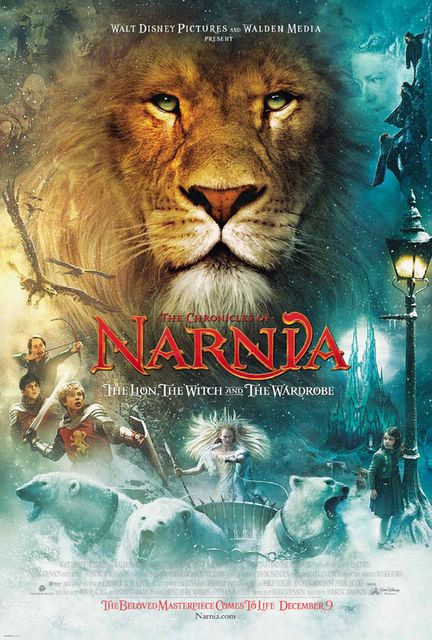
I'm so looking forward to this movie. Anyone have an inside line on whether the film is loyal to the book?
Major Blog Milestone
Yesterday, I crossed the 10 thousand point in blog visits. More than 10 thousand in almost exactly three months. According to my stat counter, I currently get an average of around 100 unique visitors each day. That has been slowly on the increase. The only other pattern I have noticed is that my traffic usually drop significantly on Saturdays and Sundays. Thanks for reading and keep coming back!
Sphere: Related ContentWednesday, June 22, 2005
Different Versions of the Ten Commandments??
For the past two weeks, I have been teaching a Bible class on the Ten Commandments at my congregation. And naturally, one of the first things I wanted to do was address the fact that different groups enumerate the commandments differently. Did you know that Roman Catholics and Lutherans number them one way, the Protestants another, and the Jews yet another? So when people debate whether the Decalogue should be inscribed on civic monuments or displayed in government buildings, they will have to make a decision as to which enumeration to follow. One argument could reasonably be made, I suppose, that by choosing one listing over the others, an endorsement is being made of a specific church or religion.
In my digging, I uncovered an old Washington Post article about this topic. You should give it a look because it shows the three different ways of numbering the commandments. Does this mean there is some kind of discrepancy in God's Word? No. Reading the Biblical accounts in Exodus 20 and Deuteronomy 5, one finds that Lutherans, Roman Catholics, Protestants and Jews all have the same commandments. But since the scriptures themselves do not delineate how they should be numbered, there may naturally arise differing listings.
It appears to me that the main difference between the Roman Catholic/Lutheran numbering and the Protestant numbering is that the Calvinists and the more radical reformers wanted to place emphasis on the whole graven image part, presumably to condemn Rome's proclivity for statues. But since the Lutherans, while not praying to the saints, found no objection in 3-dimensional church art, they understood the graven image prohibition as simply part of having no other gods.
I'm most intrigued by the fact that in the Jewish tradition, the first commandment is not a commandment at all, but a statement of gospel: "I am the Lord your God, who brought you out of Egypt, out of the land of slavery." As a Lutheran Christian, I can appreciate that very well. The commands then become less imperative and more indicative. A Christian might understand it this way: "I am the Lord your God, who brought you out of slavery to sin and the grave by the death and resurrection of my Son, your Lord, Jesus Christ." In that case, the commands become descriptive of how God's children live, not just how they should live or must live. It's a statement of who we are in Christ Jesus. Or as our Lord Himself put it: "You are the light of the world. You are the salt of the earth."


